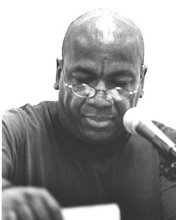
The British Marxist art critic John Berger is not much read now, at least in America, but he was a very important figure in the Nineteen Seventies and Nineteen Eighties. Ways of Seeing, published in 1972 as the companion to a BBC television series, is by far the most famous and influential of his many books. It was a major text in disseminating the idea of seeing as a social practice: as he writes in the book, “all images are man-made” (9). The book played an important role in popularizing the notions of seeing as a mode of reading and of the social world as a text to be interpreted. It was a major impetus in the development of what has come to be known as cultural studies.
Berger has been very important to my thinking about visual art and visuality. But his reflectionist view of art, in which elements of the artwork are equated to elements of the world and specifically of the artist's life, has always bothered me. Among several other more useful things (including surveying the history of the oil painting as a medium intimately associated with property and possession and analyzing the female nude as a specifically voyeuristic instance of that mode of ownership he sees the oil painting as embodying and enacting), Berger takes biographical information about the artist, or rather, biographical conceptions about the artist and the meaning of his life, as constitutive of a given painting’s meaning. Berger’s brief comparison of two Rembrandt self-portraits, the first as a young and prosperous man, the second as an old and presumably much poorer man, exemplify this reductive approach. Berger takes a version of the shape of the artist’s life, supported by specific biographical data (Rembrandt had just married Saskia when he painted the first self-portrait; six years later she would be dead), as the meaning of the painting. The basis of this elision of the painting, its meaning, and its creator’s biography is a representationalist view of the painting, deriving from a representationalist view of knowledge. For Berger, the painting means only insofar as it resembles in a two-dimensional format some aspect of human life or the phenomenal world (which in turn resembles some world of meaning) which it, by means of and directly as such resemblance, represents. This view presumes a direct correspondence between the painting and that which it represents: the painting is a mimesis of something in the world rather than an object in that world.
For Berger, a painting’s meaning is constituted by what it says about something else; the painting is always a reference to some other thing. It is this implicit premise that allows Berger to enlist the artist’s biography as a source of meaning, however much he discusses oil painting as a medium. For him, the meaning of a painting is the meaning of its subject matter. The subject matter of the two Rembrandt self-portraits is the painter; thus, their meaning is the meaning of his life.
Berger confuses the subject matter of a painting with its content, as many people confuse the reference of a poem with its sense. He conflates the referent with the signified, as if the relationship between the two were intrinsic and not conventional. The visual image, even more than words (simultaneously the most abstract and the most concrete of entities), exists as an object as well as a representation of an object. Berger reduces form to nothing more than a vehicle for meaning, though the painted image is by its material constitution more a form than a content. The content a painting embodies is equated with the subject matter to which it refers; form, structure, style, technique, are all merely the means by which this is presented to view. The painting is a mirror of the phenomenal world. This conviction underlies Berger’s often-evident but never, to my knowledge, thematized hostility to artistic abstraction. Abstraction makes explicit that paintings are made out of paint, whatever shapes that paint may mime. For Berger, if a painting contains no image that can be interpreted as some item of the physical world, and preferably of the human world, then it can have no content and thus no meaning.
Berger’s assumption of a natural, self-evident relation between a painted image and its meaning is shown in such statements as “if one approaches [Rembrandt’s painting of himself and his first wife] without sentimentality, one sees that its happiness is both formal and unfelt.” Art historian E.H. Gombrich has exploded at some length this myth of the “innocent eye” which simply sees things as they are. In the later self-portrait “[Rembrandt] is an old man. All has gone except a sense of the question of existence, of existence as a question.” Would Berger say the same thing if Rembrandt had been smiling? If the painting were revealed not to be a self-portrait at all? If it were proven to have been painted in Rembrandt’s youth? Existence, after all, would still be a question. In these passages, the idealism of Berger’s view of paintings (as distinct from the materialism of the painting as an aesthetic object) is clear. What, exactly, is this universal “existence” which is shown in the later self-portrait as a question? Berger’s readings derive from certain always already-given ideas of the meaning of prosperity and good fortune and their relation to real happiness, of old age and poverty as the states in which some universal “one” engages “the question of existence.” What they do not derive from is any particularly close attention to the painting as such, rather than as a stand-in for something else. In this case, the something else in whose stead the painting stands (or hangs on a museum wall) is Rembrandt’s life and its exemplification of a certain idea of the meaning of life. While Berger calls the painter in Rembrandt “both more and less than the old man” portrayed in this painting, in practice he conflates painter and subject.
Art historian Nicos Hadjinicolaou, author of Art History and Class Struggle (1978), perhaps a more rigorous Marxist, would object to Berger’s emphasis on the painter as unique individual as the source of a painting’s meaning, but only because his interest is in the painter as agent of a particular class ideology. Hadjinicolaou makes a useful distinction between painting seen as an ideological form (including just what we consider to be a painting and why) and painting seen as a vehicle of ideologies (which is reductionist): a distinction that produces the valuable concept of “visual ideology.” But this useful idea slips from that of the ideology of the visual to that of the ideology in the visual, an altogether cruder conception. The painting is the expression of visual ideology, which is in turn the expression of general social ideology. Thus Hadjinicolaou would fault Berger for discussing the two Rembrandt self-portraits in individualist terms, rather than in terms of ideologies and class positions. But their potential disagreements are quibbles within a fundamental agreement about the nature of the artwork and the nature of knowledge.
For Hadjinicolaou, not just paintings but people represent and refer to reality, and are significant only referentially. Berger, who is at heart a humanist, though a critical one, remains far more committed to the significance (in both senses) of the individual. For him, human individuals are the reality to which paintings refer. Hadjinicolaou takes the initial representational premises further than Berger does, so that not human beings but their social context are the final meaning, the transcendental signified, in Derrida’s phrase. Both are agreed in allowing art no independent reality of its own.
The analogies with the worlds both of contemporary American literary criticism and of contemporary American poetry are clear. In both, literature is seen as a social symptom. For Ted Kooser, a poem is a symptom of the person who wrote it, to the point that he professes to be disappointed in a first-person poem that is not a factual representation of the poet’s life. For Ron Silliman, a poem is a symptom of the poet’s position within the map he has drawn of the poetry world, and its significance in all senses of the word can be read off where he places its author on that map. In neither case is the poem much more than a stand-in for something else, something both more interesting and more important than mere literature. But just as a painting is not just a representation or reflection of the world but a new object in the world, so is a poem a new object or, perhaps more accurately, a new event or occasion in the world, an addition to the world.
Showing posts with label Nicos Hadjinicolaou. Show all posts
Showing posts with label Nicos Hadjinicolaou. Show all posts
Friday, February 16, 2007


Subscribe to:
Posts (Atom)