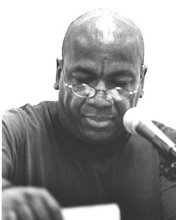
Cultural anthropologist (and my much-loved partner) Robert Philen has two recent posts on his always fascinating blog that I think will be of particular interest to readers of this blog.
The first, "A Democracy of Creation and Taste (But Not Quality)," he points out that while "In much of the world today, there is something like a democracy of creative expression, where most everyone can say what they want about whatever, even if some people are better able to have their voices heard and are more influential," at the same time, though "There’s no single way to evaluate the quality of art...art and other instances of creative expression do have objective qualities – meaning that they are objects in the world with empirical qualities"--qualities that can be analyzed, evaluated, and judged.
In other words, the democratization of creativity is not equivalent to a democratization or leveling of judgments of artistic quality: as Robert writes, "the fact that there’s no single way to evaluate the relative quality of works of art, doesn’t mean that all creative expression is the equal of every other." The aesthetic world is not flat.
Robert's second and more recent post of interest is called "In the Long Run Our Culture Has Good Taste," in which he points out that "People often have the impression that pop culture and the arts used to be better. This impression comes from the fact that in the long term, we actually have good taste, and this skews our memory of the past." We are very aware of the ephemeral dreck (my phrase, not his) of our own time, but that of the past has fallen away, and all that remains or tends to be remembered are the high points--Frank Sinatra's soulful ballads, not his duet with a talking dog.
As he points out, and this is a way in which the two posts are directly related, "Objects of creative expression (and I would include scholarly expression as much as art here) that maintain the interest of many for very long, though highly various, tend to have objective qualities that reward repeated reflection and rumination (i.e. they’re actually at least somewhat profound) and that are not overly determined by the moment of their creation, allowing them to communicate across temporal contexts."
I encourage everyone to read these stimulating and insightful pieces.
Showing posts with label Robert Philen. Show all posts
Showing posts with label Robert Philen. Show all posts
Wednesday, February 27, 2008


Wednesday, January 9, 2008
Robert Philen on Art Music and Popular Music
Robert Philen has a new piece on his wide-ranging and always-fascinating blog on some of the interactions between art music and popular music. In this piece, titled simply Art Music and Popular Music, Philen lays out three modes or methods that art music composers use to bridge the gap between popular culture and high art (and also points out that this traffic travels along a two-way street, with popular music composers and performers drawing on art music as well). Along the way, he makes the important point "that there are at least two different ways of conceptualizing the popular, the popular in the sense of folk culture and music or in the sense of modern 'pop culture' or 'mass culture.'" These two tend too often to be conflated by practitioners of what used to be called cultural studies.
I encourage everyone to read this stimulating piece.
I encourage everyone to read this stimulating piece.
Monday, August 6, 2007
An Insightful Piece on Accessibility, Difficulty, and Their Relationship to Artistic Quality
Robert Philen has another very insightful piece on his always fascinating blog on the questions of accessibility and difficulty in art and their relationship to artistic quality, in which he makes the point that neither attribute has any intrinsic relationship to artistic quality; nor does a work's relative popularity or obscurity determine or even indicate its quality. Philen argues against the common assumptions either that a work which is accessible and/or popular is thereby good (this viewpoint usually dismisses more difficult work as "elitist" or "exclusionary") or that a work which is difficult and/or obscure is therefore good (this viewpoint usually dismisses more accessible work as meretricious at worst, at best not to be taken seriously).
As Philen writes, "What I’d like to most emphasize here is that when it comes to artistic expression, accessibility/difficulty is an important quality (or really a set of qualities, given different varieties of difficulty) which is independent of the aesthetic merits of a work, that is, independent of whether a work manifests something profound or beautiful, independent of whether a work successfully unifies the concrete and universal, the timely and timeless (see my recent post, "Great Art, Timeliness, and Timelessness").
"This is actually a fairly simple and straightforward point, but I make it in opposition to common claims or assumptions that either accessibility or difficulty signal either good or bad art.
"Similar assumptions are often made with regard to a related quality of creative expression--its popularity or obscurity (like accessibility and difficulty, these are simply inverse ways to regard the same basic quality). (These qualities are related not in that most accessible art is particularly popular nor that most obscure art is necessarily difficult. For that matter, a work’s level of popularity or obscurity can change over time without its level of difficulty particularly.... Instead, the relationship between accessibility/difficulty and popularity/obscurity is more that most popular works tend to be relatively accessible and most difficult works tend to be more obscure...."
I encourage everyone to read this clear-minded piece that cuts through the fog of assumptions and presumptions in which many who write about the arts operate.
As Philen writes, "What I’d like to most emphasize here is that when it comes to artistic expression, accessibility/difficulty is an important quality (or really a set of qualities, given different varieties of difficulty) which is independent of the aesthetic merits of a work, that is, independent of whether a work manifests something profound or beautiful, independent of whether a work successfully unifies the concrete and universal, the timely and timeless (see my recent post, "Great Art, Timeliness, and Timelessness").
"This is actually a fairly simple and straightforward point, but I make it in opposition to common claims or assumptions that either accessibility or difficulty signal either good or bad art.
"Similar assumptions are often made with regard to a related quality of creative expression--its popularity or obscurity (like accessibility and difficulty, these are simply inverse ways to regard the same basic quality). (These qualities are related not in that most accessible art is particularly popular nor that most obscure art is necessarily difficult. For that matter, a work’s level of popularity or obscurity can change over time without its level of difficulty particularly.... Instead, the relationship between accessibility/difficulty and popularity/obscurity is more that most popular works tend to be relatively accessible and most difficult works tend to be more obscure...."
I encourage everyone to read this clear-minded piece that cuts through the fog of assumptions and presumptions in which many who write about the arts operate.
Wednesday, August 1, 2007
An Important Piece on the Continuing Value of Enlightenment Ideals
On his always interesting and engaging blog, Robert Philen has posted an important piece called "Enlightenment Values"arguing against the currently popular tendency to denigrate or dismiss the universalist values of Englightenment humanism because its founding figures didn't always adhere in practice to their own values. Philen points out that the fact that the actions of some of the framers of the ideals of the Enlightenment didn't always live up to those ideals doesn't negate the value of those ideals. In fact, this critique of the Enlightenment is itself based on the very Enlightenment values whose hollowness it claims to unveil.
The prolific historian J.M. Roberts makes the same point about both Marxism and Christianity in his book The Triumph of the West: "The appalling practical outcome of the installation of Marxism in some countries as a state religion no more affects [the judgment that Marxism restates and summarizes some of the West's most central ideas] than scores of historical examples of institutional Christianity acting in a repressive, uncreative way in the past nineteen hundred years nullify the central messages of the Gospels" (80).
As Philen points out, "The fact that Thomas Jefferson was a slaveholder doesn’t undermine his words regarding liberty and equality. It makes him a hypocrite, something he himself was aware of, but it doesn’t and shouldn’t make his words in the Declaration of Independence any less stirring (nor do you have to be a communist to be stirred by the evocation of those very words by Ho Chi Minh against French colonialism in the mid-20th century). Nor was his slaveholding a part of an Enlightenment Project. Instead, this was a practice resisting such a project and contradicting his own stated values."
I encourage everyone to read this insightful and bracingly sensible piece.
The prolific historian J.M. Roberts makes the same point about both Marxism and Christianity in his book The Triumph of the West: "The appalling practical outcome of the installation of Marxism in some countries as a state religion no more affects [the judgment that Marxism restates and summarizes some of the West's most central ideas] than scores of historical examples of institutional Christianity acting in a repressive, uncreative way in the past nineteen hundred years nullify the central messages of the Gospels" (80).
As Philen points out, "The fact that Thomas Jefferson was a slaveholder doesn’t undermine his words regarding liberty and equality. It makes him a hypocrite, something he himself was aware of, but it doesn’t and shouldn’t make his words in the Declaration of Independence any less stirring (nor do you have to be a communist to be stirred by the evocation of those very words by Ho Chi Minh against French colonialism in the mid-20th century). Nor was his slaveholding a part of an Enlightenment Project. Instead, this was a practice resisting such a project and contradicting his own stated values."
I encourage everyone to read this insightful and bracingly sensible piece.
Friday, July 27, 2007
Timeliness and Timelessness in Art
Anthropologist and cultural theorist Robert Philen has a recent piece on his always fascinating blog on "Great Art, Timeliness, and Timelessness".
Here are a couple of quotes from this insightful essay.
"Great art always has two qualities with relation to temporality. It is of its moment – any art cannot help but be shaped by the realities of the era, but great art also reflects and shapes its moment, and does so in a different manner than equally great art of an earlier era. It is timely. Simultaneously, great art transcends its moment, it communicates powerfully well after its creation. It is timeless.
"It is possible to have the first quality without the second, that is, to be timely without being timeless."
"While timely art without timelessness is a clear possibility, I’m not convinced that the second quality of great art, timelessness, is possible without the first, timeliness. Part of what allows for transcendence is the artist’s tapping into a universal human experience, that of grappling with reality, attempting to understand one’s surroundings and reality and attempting to shape that reality, and presenting this in artistic form requires a grappling with and groundedness in contemporary reality. In great art, we see a union of the concrete and timely and the universal and timeless."
I urge all interested parties to read the entire piece. Philen promises a follow-up piece in which he will apply these ideas to the work of the jazz and classical trumpeter Wynton Marsalis.
Here are a couple of quotes from this insightful essay.
"Great art always has two qualities with relation to temporality. It is of its moment – any art cannot help but be shaped by the realities of the era, but great art also reflects and shapes its moment, and does so in a different manner than equally great art of an earlier era. It is timely. Simultaneously, great art transcends its moment, it communicates powerfully well after its creation. It is timeless.
"It is possible to have the first quality without the second, that is, to be timely without being timeless."
"While timely art without timelessness is a clear possibility, I’m not convinced that the second quality of great art, timelessness, is possible without the first, timeliness. Part of what allows for transcendence is the artist’s tapping into a universal human experience, that of grappling with reality, attempting to understand one’s surroundings and reality and attempting to shape that reality, and presenting this in artistic form requires a grappling with and groundedness in contemporary reality. In great art, we see a union of the concrete and timely and the universal and timeless."
I urge all interested parties to read the entire piece. Philen promises a follow-up piece in which he will apply these ideas to the work of the jazz and classical trumpeter Wynton Marsalis.
Friday, June 22, 2007
A Few Recent Posts of Interest
On his wide-ranging and always engaging blog, Robert Philen has several recent pieces dealing perceptively with music, popular, jazz and classical.
Arguing against the frequently apparent desire to valorize jazz by calling it America's native version of "classical" music, "Jazz Is Not America's Classical Music" focuses on the distinct qualities of American jazz and American classical music. To conflate the two, as he points out, is to miscontrue the nature of jazz and to misrecognize what's unique and valuable about it, as well as to marginalize America’s classical music tradition, one which includes such composers as Samuel Barber, Aaron Copland,Philip Glass, Charles Ives, and Steve Reich. Jazz doesn't need to be America's classical music. It is better to appreciate both in their own terms.
"The Experience of Live Music" addresses both the experience of seeing musicians produce the organized sounds we recognize as music and the differences between the experience of watching/hearing a live music performance and the experience of listening to a recording, even of the same piece of music. It also discusses the ways in which the two experiences interact with and inform one another.
"Generation Gaps, Popular Music, and Affluence" looks at changes in popular music tastes in an historical and social context, that of rising middle class affluence after World War II and of a changing conception of "youth" that was no longer restricted to the chronologically young, a change in the place of play and leisure in adult life which was made possible by that postwar affluence.
I encourage everyone interested in these topics to read these well-argued and well-written pieces.
Arguing against the frequently apparent desire to valorize jazz by calling it America's native version of "classical" music, "Jazz Is Not America's Classical Music" focuses on the distinct qualities of American jazz and American classical music. To conflate the two, as he points out, is to miscontrue the nature of jazz and to misrecognize what's unique and valuable about it, as well as to marginalize America’s classical music tradition, one which includes such composers as Samuel Barber, Aaron Copland,Philip Glass, Charles Ives, and Steve Reich. Jazz doesn't need to be America's classical music. It is better to appreciate both in their own terms.
"The Experience of Live Music" addresses both the experience of seeing musicians produce the organized sounds we recognize as music and the differences between the experience of watching/hearing a live music performance and the experience of listening to a recording, even of the same piece of music. It also discusses the ways in which the two experiences interact with and inform one another.
"Generation Gaps, Popular Music, and Affluence" looks at changes in popular music tastes in an historical and social context, that of rising middle class affluence after World War II and of a changing conception of "youth" that was no longer restricted to the chronologically young, a change in the place of play and leisure in adult life which was made possible by that postwar affluence.
I encourage everyone interested in these topics to read these well-argued and well-written pieces.
Friday, June 1, 2007
An Insightful Piece about American Racial Discourse
On his wide-ranging and always fascinating blog, anthropologist and cultural thinker Robert Philen has a very insightful recent piece on the limitations of racial discourse in America which quite eloquently addresses the need to find new ways to talk about and address racial questions and issues. The piece can be found here.
I urge anyone with an interest in getting out of the racial morass in which this country finds itself to read this piece.
I would also like to remind readers of my piece "Some Thoughts on Race and Academia," which extensively lays out some of the ways that this often contradictory racial discourse plays itself out in academia, specifically in English departments.
I urge anyone with an interest in getting out of the racial morass in which this country finds itself to read this piece.
I would also like to remind readers of my piece "Some Thoughts on Race and Academia," which extensively lays out some of the ways that this often contradictory racial discourse plays itself out in academia, specifically in English departments.
Thursday, May 31, 2007
Two Excellent Posts on the Purposes of Art
Anthropologist and cultural theorist Robert Philen has two very interesting recent posts on his blog, essays on the roles and functions of art. The first piece, "The Purposes of Art", addresses the question in historical terms, while the second, "Troy and the Purposes of Art", examines the ways in which the recent historical-mythological epic film Troy more specifically exemplifies some of the functions art can perform.
Both are highly intelligent, well thought out pieces. I strongly recommend them.
Both are highly intelligent, well thought out pieces. I strongly recommend them.
Thursday, April 19, 2007
Two Posts of Interest
My partner, anthropologist and cultural theorist Robert Philen, has two very interesting recent posts on his blog.
The first post, "Longfellow, George Will, Poetry, and the Artist or Individual Thinker", discusses the different cultural status of poetry in America between the nineteenth century and the twenty-first century, the ideas of accessiblity and difficulty in art (which I have also addressed several times in this blog), and the relationship of art to the artist's biography or social context (arguing, as I have done as well, that the one is not determined by the other).
The second post, prompted by a performance we saw together of Stravinsky's The Rite of Spring at the Atlanta Symphony Orchestra, is called "Stravinsky's Rite of Spring and the Experience of Art (Musical and Visual)", discusses the difference in the experience of live musical performance or original works of art from the experience of art in reproduction, as well as the greater conservatism of audiences for "classical" or "serious" music as compared to the audiences for visual art.
I highly recommend both pieces.
The first post, "Longfellow, George Will, Poetry, and the Artist or Individual Thinker", discusses the different cultural status of poetry in America between the nineteenth century and the twenty-first century, the ideas of accessiblity and difficulty in art (which I have also addressed several times in this blog), and the relationship of art to the artist's biography or social context (arguing, as I have done as well, that the one is not determined by the other).
The second post, prompted by a performance we saw together of Stravinsky's The Rite of Spring at the Atlanta Symphony Orchestra, is called "Stravinsky's Rite of Spring and the Experience of Art (Musical and Visual)", discusses the difference in the experience of live musical performance or original works of art from the experience of art in reproduction, as well as the greater conservatism of audiences for "classical" or "serious" music as compared to the audiences for visual art.
I highly recommend both pieces.
Saturday, March 31, 2007
A Blog Post of Interest
Robert Philen has an incisive recent post on his blog about "Art That's More Interesting to Think About Than to Experience." We've all had the experience of an artwork that was neither particularly interesting nor pleasurable but was interesting to think about or talk about, and of finding that those thoughts were more interesting than the artwork which incited them.
Monday, March 12, 2007
A Few Posts of Serious Interest
Robert Philen has two recent posts on his blog that are both insightful and articulate in their own right and also directly relate to my earlier post "What Is Progressive Art?" The posts are called "Free Jazz and the End of the History of Jazz" and "The End of the History of Music," and they take a neo-Hegelian approach which applies the teleological theories of visual art critic Clement Greenberg and visual art critic and philosopher Arthur C. Danto to a theory of the history of western art music as the stripping away of what is not essential and unique to it (Greenberg) and as the search for the zero degree of difference between music and noise or sheer sound (Danto). I highly recommend both posts.
I also recommend an earlier post by Robert Philen, "Charlie Parker and Shostakovich: Art, the Artist, and Culture," which deals eloquently with the relation of art to its historical and social context and specifically to the artist's biography, arguing (as I have often done) both against the reduction of the artwork to its context and against the attempt to use that context to explain the artwork.
I also recommend an earlier post by Robert Philen, "Charlie Parker and Shostakovich: Art, the Artist, and Culture," which deals eloquently with the relation of art to its historical and social context and specifically to the artist's biography, arguing (as I have often done) both against the reduction of the artwork to its context and against the attempt to use that context to explain the artwork.
Monday, February 12, 2007
A New Blog Worth Reading
For all who may be interested, my partner, Robert Philen, a cultural anthropologist of wide-ranging interests, has started an insightful blog on culture theory, cultural and political commentary, and anthropology.
The blog address is Robert Philen's Blog. I urge you to give it a look.
The blog address is Robert Philen's Blog. I urge you to give it a look.
Subscribe to:
Posts (Atom)