In his very interesting and deeply flawed essay “Stevens Without Epistemology” (in Gelpi), Gerald Bruns attempts (and, finally, fails) to read Stevens against the grain, in Walter Benjamin’s phrase. Bruns attempts to read Stevens “deconstructively,” attentive to the rifts and fissures in his discourse. I have undertaken to do the same for Bruns, while preserving a sense of the value of his intervention.
Most of Stevens’ critics have read him from within the ideology of the text, sharing its foundational assumptions: i.e., the posing of questions of epistemology as its fundamental problematic. They have engaged in what Theodor Adorno calls immanent critique. The question Bruns poses is “What happens to our reading of Stevens’ poetry when the problem of how the mind links up with reality [i.e., epistemology] is no longer of any concern to us?” (24). Bruns is quite careful (sometimes to the point of condescending to the reader) to situate Stevens’ work within an intellectual framework. At times, he seems more interested in the framework, and in particular in debates with Geoffrey Hartman and Jacques Derrida, than in Stevens’ work. This is hardly rare among literary critics.
Bruns defines “the ‘epistemological turn’ in Western thinking’” (24), initiated by René Descartes, as the point when “questions about nature, reality, or the world began to be reformulated as questions about...Mind or Spirit” rather than about Being (24). The linguistic turn, seemingly simultaneous with the incipience of the twentieth century, and implicitly identifiable with the unmentioned Ludwig Wittgenstein, in turn reformulated these questions about mind into questions about language. Finally (but at no specified point), “there came a time when questions about language (and also therefore questions about mind and reality) began to be reformulated as questions about social practice” (24). This was the hermeneutical turn, concerned “with the historical and dialogical nature of understanding” (25).
Both the vagueness of Bruns’ periodization and its absences strike me as rather odd. Wouldn’t Karl Marx be rather crucial to any account of a soi disant “hermeneutic turn,” if such a “turn” is indeed a matter of attendance to “social practice?” And wouldn’t this hermeneutic turn predate the “linguistic turn,” which can be seen as a reaction against the hermeneutic turn as so defined? (I don’t think this is an idiosyncratic view of logical positivism, for example.) After all, in his “Theses on the Philosophy of History,” Marx did write that while philosophers have traditionally attempted to interpret the world, whereas our true duty is to change it.
This absence reveals a certain anxiety of influence on Bruns’ part, in its implicit insistence on the priority and originality of his discourse. He makes an explicit claim to be doing what has not been done before, and his implicit positioning of himself as a pioneer of the new, original, “hermeneutic turn” seems crucial to that claim. Nor is the erasure of Marxism and the specificity of “social practice” it stands in for irrelevant to the emptied-out, idealist categories of “otherness” Bruns deploys. Bruns claims a social and even potentially political engagement that his conceptual apparatus rules out from the start.
Bruns contends that Stevens cannot be accurately read in terms of the linguistic turn, because “language [as just another mental product] just didn’t have much reality for Stevens” (25). To the extent that this is true, this is a source of Stevens’ indifference to problematics of form and of the poetic tradition. For Stevens “language” and “mind” are finally interchangeable terms. Bruns further asserts that Stevens has generally been read in idealist (i.e., epistemological) terms, and that he shall read him in hermeneutical terms, in terms not of the mind’s relation to reality but of the problem of other people: a problem not “of knowledge or of language...but of dialogue” (26), of people in society. This is a problem, Bruns asserts, that Stevens does not explicitly address. If we look at “Owl’s Clover,” an argument with the socialist view of the place and function of art, but also at shorter poems like “Mozart, 1935,” which judges Mozart and his music, “that lucid souvenir of the past,” to be inadequate to the fear, pain, and sorrow of the present moment (the moment of the Depression and gathering war clouds in Europe)—"We may return to Mozart./He was young and we, we are old,” but now the poet must play the present—it is clear that Bruns underestimates (privileging his critical knowledge over Stevens’ self-knowledge) the degree to which Stevens addresses, directly and indirectly, the problem of “people in society.”
Stevens’ poetry, as Bruns characterizes it, is that of the spectator, seeing or constructing something in order to make it intelligible and therefore his (the spectator is always male in Stevens’ poetry) own. It is a peopled poetry, but “people in Stevens’ poetry never answer back” (26). Bruns sees much of Stevens' poetry’s problematic as issuing from the attempt to silence or assimilate other voices when they do emerge, often from night or darkness: this is, not coincidentally, the ideological realm connoted as that of women and of “the coons and the snakes” of Italian-invaded Ethiopia, on whose side Stevens said himself to be against the Italians. It is the attempt “to keep...otherness from happening” (27), by converting dialogue into private meditation and “people into pure emotion” (29), or by denying a human source to a voice, e.g., the cry (a common index of otherness in Stevens, according to Bruns [35]) in “The Course of a Particular” that is not finally a “human cry,” that “concerns [or rather, need concern] no one at all.” “For Stevens, success in experience means hearing no one’s voice but your own. One can then enter into a new world without any loss of self-possession” (27-28). But Bruns, in making “otherness” completely abstract, formal, indeed, epistemological, repeats the same error of which he accuses Stevens, succumbing to the terms of Stevens’ discourse in the same way he accuses others of doing, and making that discourse more simplistic and univocal than it is.
Bruns very interestingly, and very problematically, characterizes Stevens as a European poet by Mikhail Bakhtin’s definition of poetry as a monological discourse (as against the heteroglossia of the novel), in contrast to much of Williams’, Pound’s, and Eliot’s work, which is more polyvocal. If Bruns means this as more than a technical observation (Pound, Williams, and Eliot incorporate quotations and employ linguistic montage, Stevens generally does not, though “Sunday Morning” is a kind of dialogue between the young woman in her peignoir and the poem’s narrator), it is simply wrong. Bruns seems to think that, because The Cantos or Paterson or The Waste Land contain quotations, other voices exist autonomously in these works, not subsumed by Pound’s or Williams’ master discourse. Bakhtin links heteroglossia and dialogue (not just several voices, but voices in discourse with one another), whereas clearly The Cantos, as a foremost example, incorporates all the cited voices into Pound’s monologue, the “victory of one reigning language (dialect) over the other” (to cite Bruns’ quotation of Bakhtin). Both The Waste Land and Paterson have a greater sense of dialogue, the interplay of voices and discourses, than do The Cantos (The Waste Land, at least, has no anchored or consistent viewpoint “I” at all), but it is the dialogue of a play whose shape and outcome have already been determined.
Given Stevens’ biographical position as, with Marianne Moore, one of the only two “stay at homes” among the major American modernists (even New Jersey-wedded Williams studied medicine in Germany), it’s odd that Bruns asserts that he “does not, it appears [to whom?], compose American texts” (34). Perhaps Stevens’ position as one of the only non-exiles, and his seemingly comfortable identification with America as it was rather as it should or could be (in contrast to his friend Williams, who also spent most of his life in America, and wrote that “the pure products of America go crazy” because of the distortions and injustices of American life), made the articulation of a rhetorical “Americanness” less of an issue for him. What would the definition of an “American text” be, and who has the authority to hand down such a definition?
Bruns proposes, as have several other commentators, most notably Hugh Kenner, that Stevens is the closest thing in English to Mallarmé, a poet whose texts “repress the phenomenon of voice in favor of” writing (34). This is an intriguing and suggestive characterization, but while Mallarmé represses “voice” into the (written) word, Stevens privileges voice (the singing voice and the crying voice), both thematically and formally. Mallarmé’s “writerliness” is very much a matter of his being the most syntactical of poets, an involvement with syntax as a constitutive and productive force that Stevens does not share. Stevens tends instead to supply given syntactical structures, those of oratory or of philosophical discourse, for example, with unexpected contents, maintaining what Mutlu Blasing calls the “gestures” of meaningful discourse. That many of those unexpected words are French or French-derived, that Stevens’ vocabulary is heavily Francophilic—in short, that, for Stevens, “French and English constitute a single language”—does not mean his poetry is “French” in Bruns’ sense. To appropriate Paul De Man’s dichotomy, Stevens is a poet of rhetoric, not of semiology (which De Man equates with grammar).
Nor does Stevens share Mallarmé’s conviction that poems are made up of words and not ideas, for to Stevens poetry is defined as the supreme fiction, not the supreme language. As he writes in his “Adagia,” “Poetry and materia poetica are interchangeable terms.” While Mallarmé seeks to dissolve content into form, much of Stevens’ appeal to the criticism industry resides in the foregrounding of conceptual content, of the “ideas” Mallarmé scorned or at least subordinated, in his poetry. Mallarmé is a poet inspired and tormented by the difference between words and the Word, books (which have all been read, alas) and the Book. For Stevens, to whom language and being are mutualities, their relationship “a consistent proportion of analogies” (Blasing 206), this is not an issue. As Stevens writes in “Adagia,” “Poetry is a poetic conception, however expressed. A poem is poetry expressed in words.” But he goes to write that “in a poem there is a poetry of words. Obviously, a poem may consist of several poetries.” If analogous figures to Mallarmé in American poetry are required (I’m not certain they are, at least not if one’s concern is “American texts”), I would nominate, in the nineteenth century, Emily Dickinson, and in the twentieth, Louis Zukofsky, both poets who write word by word, who foreground the written nature of their discourse, and for whom both syntax and the relationship of logic and Logos are central concerns.
To return to Bruns’ argument, for Bakhtin “The poet is a poet insofar as he accepts the idea of a unitary and singular language and a unitary, monologically sealed-off utterance” (The Dialogic Imagination, quoted 31). The poem, unlike the novel, is univocal. “The world of poetry, no matter how many contradictions and insoluble conflicts the poet develops within it, is always illumined by one unitary and indisputable discourse. Contradictions, conflicts, and doubts remain in the subject, in thoughts, in living experience—in short, in the subject matter—but they do not enter the language itself. In poetry, even discourse about doubts must be cast in a discourse that cannot be doubted” (op. cit., quoted 31-32). Taking this not as prescription, but as a description of a particular poetic mode, Bruns asserts that “[s]ound in such a text [the ideal type of which would be the Book to which Mallarmé’s texts aspire] aspires not to the illusion of someone speaking but to the formal conditions of music” (34). Here Bruns alludes to Walter Pater’s famous formulation that all art aspires to the condition of music, an art whose form and whose content are indissoluble and which is thus impervious to interpretation, an aesthetic ding an sich.
Bruns thus reads sound in Stevens’ poetry, which is frequently foregrounded (though to a much greater degree in the early work than in the late, a distinction of which Bruns would do well to take greater note), as a strategy by which Stevens “plays out...the drama of the fear and repression of alien voices.” One presumes that Bruns means by this that the insistence on the noise his own voice can make is a means for Stevens to drown out other (or Other) voices thematically present or implied. This would explain why Stevens’s most exoticist poems are often his most sonically insistent. Content is sublimated into form: a potentially threatening otherness is emptied out and rendered harmless by being translated into the glamour of an “exotic” language. Aestheticization is thus a mode of the appropriation of alterity, a repression or erasure in which epistemological readings collude.
This paranoiac drama of repression and appropriation is, in Bruns’ words, Stevens’ “strange, difficult way of being an American poet” (35). This is so because, as should be apparent from the discussion of Bakhtin above, for Bruns American poetry is characterized by heteroglossia. Thus much of Stevens’ interest is that “he is a poet troubled by the sort of poetry he is not writing and perhaps can’t bring himself to think of as poetic—the poetry of the other.” which might disturb the “monumental slumber” of a European tradition Bruns, tellingly, describes as “ours” (35). As some version of Tonto once said to the Lone Ranger, What you mean “we,” white man? Bruns does not give Stevens enough credit for being aware of what he is not writing, for deliberately and consciously not writing in certain modes or of certain contents, and for explicitly staging and dramatizing (perhaps I should write, thematizing) that awareness and that exclusion in many of his poems.
The question of who is or is not a properly “American” poet, of the definition of “American poetry” (and what and who gets to be included or excluded under that rubric), like the rhetorical jousting among Hugh Kenner, Marjorie Perloff, and Harold Bloom over whether the modern period in poetry is “the Pound Era” or “the Age of Stevens,” is wholly imaginary, a “problem” of critics and their will to taxonomy (one of the expressions of the critical will to power), not of poets or of poems. It is produced by the critic’s insistence on his or her own capacity to classify and account for the poem or the body or work, his or her “object,” and to thus assimilate this “object’s” discourse into his or her own, to silence the poets he or she purports to explain to themselves. And given Bruns’s insistence on the absence of a founding authority for American poetic discourse, there can be no other but a “strange” and “difficult” way of being an American poet.
I would have liked to see more specificity on Bruns’ part about the “othernesses” silenced in Stevens’ work, which are in Bruns’ text wholly abstract. In the words of John Carlos Rowe, “The slippage from the ‘otherness’ of what is repressed in ordinary acts of communication to the ‘other’ obscures the specificity of actual social ‘others.’ The very generality of the ‘other’ suggests a totalizing system likely to disregard differences of race, gender, class, culture, and history” (191). By choosing as his two main examples “Evening Refrain” and “The Course of a Particular,” poems in which the “othernesses” erased or silenced are non-human, and by these choices making otherness epistemological, not social, Bruns' discussion of “otherness,” again by some strange mimicry of the drama of fear and repression he describes in Stevens, erases the actual “others” in Stevens’ work. These others tend to be women (Bruns obliquely notes this in his discussion of “Apostrophe to Vincentine” [28], in which Vincentine steadily transforms from a purely imaginary figure into a real human presence that the poet must then transform back into “heavenly, heavenly Vincentine,” as if warding off the woman, without incorporating the fact into his argument) and exoticized racial others, usually black people.
An example would be the “nigger mystics” of “Prelude to Objects,” representatives of “the guerilla I” who “should change/Foolscap for wigs,” abandoning poetry for academic scholarship. This is an ambivalent presentation, in which the “nigger mystics” are noble savages, both primitive in the negative sense and primal in the way that poetry, “patting more nonsense foamed/From the sea,” is primal. The apparent recommendation of “Academies/As of a tragic science” seems ironic, since the poem concludes by saying “We are conceived in your [that is, the poet’s] conceits. Thus the “nigger mystics” are both denigrated by their description and presented as poetic ideals.
In a poem like “The Virgin Carrying a Lantern.” the two threatening othernesses that must be neutralized are (rather economically) combined into the “negress,” the black female other implicitly compared to a bear (emphasizing her animal nature), “who supposes/Things false and wrong” about the lantern (the light of wisdom?) carried by the implicitly white female other, who is split off and enshrined as the eponymous (and unthreatening) virgin. The poem enacts a version of the Madonna/whore dichotomy, in which the white woman, while a “beauty,” represents light and purity, while the black woman is filled “with heat so strong” by the lantern, her sexuality presumably having overcome her, in contrast to the virgin who walks only “as a farewell duty” before “her pious egress.”
Cornel West has noted that the discourse of postmodernism (a construction I adopt precisely because it conflates “postmodernist discourse” and “discourse about postmodernism” and thus leaves open the amorphous status of the entity “postmodernism”) “highlight[s] notions of difference, marginality, and otherness in such a way that it further marginalizes actual people of difference and otherness,” most particularly black people and women of all races (“Black Culture and Postmodernism.” in Kruger and Mariani 91-92). Bruns’ essay is very much part of that discourse of postmodernism, a repetition of the same (in)difference. Bruns tentatively approaches a social or even political reading, but stops far short. He translates his “hermeneutic” (read “political”) reading into exactly the “formalist,” “epistemological” terms he criticizes in others. The anxiety in the face of alterity Bruns diagnoses in Stevens is an anxiety equally at work in his own discourse, if not more. Stevens at least admits those others into his poems, however problematic and even contradictory his treatment of them. Bruns simply erases them altogether.
Works Cited
Blasing, Mutlu Konek. American Poetry: The Rhetoric of Its Forms. New Haven, CT: Yale University Press, 1987.
Gelpi, Albert, Ed. Wallace Stevens: The Poetics of Modernism. Cambridgeshire: Cambridge University Press, 1985.
Kruger, Barbara, and Phil Marian, Eds. Remaking History: Dia Art Foundation Discussions in Contemporary Culture No. 4. Seattle, WA: Bay Press, 1989.
Rowe, John Carlos. “Postmodernist Studies.” In Stephen Greenblatt and Giles Gunn, eds., Redrawing the Boundaries: The Transformation of English and American Literary Studies. New York: The Modern Language Association, 1992.
Stevens, Wallace. Complete Poetry and Prose. New York: Library of America, 1997.
Tuesday, March 25, 2008


Saturday, March 15, 2008
The Fascination of What's Difficult
The question of difficulty is one with which I wrestle constantly. I want to communicate in my poems—I can’t imagine writing without the desire to reach someone (nor could Paul Celan, a very “difficult” poet)--but at the same time I don't want to pander, and I don't want to do or say things in the conventional or expected ways. No one should set out to write difficult poetry (that’s just to provoke), any more than one should set out to write easy poetry (that’s just to pander). One should follow the lead and the needs of the poem at hand.
I don't think that any good poet intends to be difficult (or that any good poet intends to be "easy"), but I also think that difficulty is sometimes both unavoidable and necessary when one is trying to get at something complex, to say something that doesn't already have an already available vocabulary (it's usually a bad thing when something does have that conveniently at-hand language), or just when one tries to approach something in a unique and distinctive way, which good poems always try to do. T.S. Eliot said that genuine poetry can communicate before it's understood, and that's certainly been my experience. If one feels the poem, the conviction of its language and its emotions, as I felt “The Love Song of J. Alfred Prufrock” when I first read it, that can lead to understanding—at least, that's the only reason one would want to understand it, the only reason one would care. It's like the experience of listening to music: we don't necessarily "understand" it, but we immerse ourselves in it and it affects us.
Much of what people say about "accessibility" is very condescending, as if "ordinary people" (whoever they are—certainly not us) are incapable of grasping or appreciating something complex, as if they're too dumb to connect with anything that has any nuance. I don’t think that poetry should be difficult, but I do think that it should be as complex as the world is. Poetry should live up to, enrich and illuminate the world, not simplify or flatten it out, which too many poems of all camps do (and probably always have—despite the perennial narratives of cultural decline, good poetry, real poetry, is a rare thing and always has been).
These days there is too often a cultural leveling, in which the notion of "equality" means that everything must be "equivalent," and all cultural products must appeal to the lowest common denominator—which is also highly patronizing, assuming that "the masses" can neither be interested in nor understand anything complex or challenging. This kind of thinking seems to function largely to displace desires for equality and democracy from the social realm to the aesthetic: a bracketing not everyone can afford. I have heard people assert that writing complex poetry is equivalent to writing in Chaucerian English (as if complexity were something obsolete which we must move past), and that difficult poetry is "unfair to the mental capacities of non-poets." Such condescending attitudes would discourage anyone from trying to read poetry—no one wants to be looked down upon.
The popularity of crossword puzzles, sudoku, video and computer games, and even convoluted television programs like 24 and The Sopranos indicates that people do in fact enjoy mental challenges. But, when people think about poetry (which is not often), and when they think of it as other than Hallmark card verse, there is the assumption that poetry is more difficult than other things (though many television commercials are more difficult to "read" than most poems), that only egghead intellectuals can enjoy or understand it, and that it has no "relevance" to "real life." That "relevance" (or "life," for that matter) could be a much broader category than simple and immediate identification is rarely considered.
I don't think that any good poet intends to be difficult (or that any good poet intends to be "easy"), but I also think that difficulty is sometimes both unavoidable and necessary when one is trying to get at something complex, to say something that doesn't already have an already available vocabulary (it's usually a bad thing when something does have that conveniently at-hand language), or just when one tries to approach something in a unique and distinctive way, which good poems always try to do. T.S. Eliot said that genuine poetry can communicate before it's understood, and that's certainly been my experience. If one feels the poem, the conviction of its language and its emotions, as I felt “The Love Song of J. Alfred Prufrock” when I first read it, that can lead to understanding—at least, that's the only reason one would want to understand it, the only reason one would care. It's like the experience of listening to music: we don't necessarily "understand" it, but we immerse ourselves in it and it affects us.
Much of what people say about "accessibility" is very condescending, as if "ordinary people" (whoever they are—certainly not us) are incapable of grasping or appreciating something complex, as if they're too dumb to connect with anything that has any nuance. I don’t think that poetry should be difficult, but I do think that it should be as complex as the world is. Poetry should live up to, enrich and illuminate the world, not simplify or flatten it out, which too many poems of all camps do (and probably always have—despite the perennial narratives of cultural decline, good poetry, real poetry, is a rare thing and always has been).
These days there is too often a cultural leveling, in which the notion of "equality" means that everything must be "equivalent," and all cultural products must appeal to the lowest common denominator—which is also highly patronizing, assuming that "the masses" can neither be interested in nor understand anything complex or challenging. This kind of thinking seems to function largely to displace desires for equality and democracy from the social realm to the aesthetic: a bracketing not everyone can afford. I have heard people assert that writing complex poetry is equivalent to writing in Chaucerian English (as if complexity were something obsolete which we must move past), and that difficult poetry is "unfair to the mental capacities of non-poets." Such condescending attitudes would discourage anyone from trying to read poetry—no one wants to be looked down upon.
The popularity of crossword puzzles, sudoku, video and computer games, and even convoluted television programs like 24 and The Sopranos indicates that people do in fact enjoy mental challenges. But, when people think about poetry (which is not often), and when they think of it as other than Hallmark card verse, there is the assumption that poetry is more difficult than other things (though many television commercials are more difficult to "read" than most poems), that only egghead intellectuals can enjoy or understand it, and that it has no "relevance" to "real life." That "relevance" (or "life," for that matter) could be a much broader category than simple and immediate identification is rarely considered.
Sunday, March 9, 2008
Robert Duncan and Me
I have always had a fondness for verbal extravagance in poetry, for rhetorical splendor and a fine excess. One should be suspicious of such excess to a certain extent (Eliot wrote that a poet should always be suspicious of language), lest it descend into mere self-indulgence. But ours is, in French novelist Nathalie Sarraute’s phrase, an age of suspicion, in which intensity of feeling and expression is an embarrassment, at best an admission of lack of discipline and self-control, at worst an invalidation of whatever one may have to say. “You’re being so emotional,” people say, as if to feel strongly cancels out the worth of one’s thoughts, arguments, or positions.
As Lani Guinier, Clinton’s failed nominee for attorney general, said in a 1994 interview in the magazine Vibe, “if you show too much emotion of whatever kind, that then defines you forever, and you don’t have the opportunity to present yourself in any nuanced or multifaceted way.” It sometimes seems that to express emotion, let alone passion, is to be marked as de trop by definition. Emotion is only allowed vicarious (and stereotyped) emotional expression by means of music, movies, and television, which offer up reified, commodified (and sterilized) versions of feeling. As Roland Barthes, as quoted in the Financial Times, of all places, once said, “What the public wants is not passion but the appearance of passion.”
Robert Duncan is a passionate poet and a poet of passion, verbal, emotional, and intellectual. His work is sometimes dismissed as sentimental. Critic M.L. Rosenthal so dismissed the opening lines of “A Sequence of Poems for H.D.’s 73rd Birthday,” from Roots and Branches [Rosenthal mis-cites the poem’s title], in his 1967 book The New Poets:
The young Japanese son was in love with a servant boy.
To be in love! Dont you remember how the whole world is governed
by a fact that embraces
everything that happens?
The passage goes in this vein for several more lines, concluding with “And youth in love with youth!” before veering off in a more mystical direction. Rosenthal’s discussion, in which “I will not say that such a passage is an imposition on the heterosexual reader” (as if homosexual readers have not been imposed upon for centuries), and in which he denigrates the passage’s emotional exuberance as a “girlish outcry,” has more than a whiff of homophobia—the expression of homosexual passion or desire is by definition “too much,” “excessive.” Rosenthal is more approving when Duncan writes of the pain and shame of homosexual desire, as in “Sonnet 1”:
Now there is a Love of which Dante does not speak unkindly,
Tho it grieves his heart to think upon men
who lust after men and run.
Sometimes Duncan’s poetry is sentimental. That is to say, sometimes the excess feels gross rather than fine, willful rather than felt, like a performance. As Wallace Stevens noted, sentimentality is not a surplus of feeling but a failure of feeling. But that is not Duncan at his best.
I am impressed by the unabashed and unembarrassed lyrical and emotional exuberance of Duncan’s poetry, the utter absence of irony or defensive self-consciousness. Not that Duncan is unself-consciousness (far from it), but self-awareness is not used as a shield or a weapon. As poet Brian Teare writes in his essay “A Drama of Truth”, “it’s Duncan’s lack of irony about his vocation, as well as [about] the possibilities and functions of both imagination and language, that makes him most vulnerable to our postmodern distrust.” On his web log, The Rest Is Noise, music critic Alex Ross writes in similar terms about Italian opera composer Giacomo Puccini that, “despite his popularity, [Puccini] creates discomfort in this hyper-stylized, ironic age, because he deals in direct emotion, [and] avoids ideology and moralism.”
Long ago an undergraduate poetry professor told us not to let irony become a pet, which too many poets these days have done: that is, when they haven’t in fact become irony’s pets. Irony is too often used as an evasion, a way to disclaim responsibility for one’s statements and one’s feelings, or even for pretending one doesn’t have feelings, which can be so disruptive, even disturbing, so messy and uncool. As Louise Glück has written from a more generous-minded viewpoint, “Too often distaste for sentiment, anxiety at the limitations of the self, create contempt for feeling, as though feeling were what was left over after the great work of the mind was finished” (“Foreword” to Frail-Craft by Jessica Fisher, xv).
While Eliot wrote that “Poetry is not a turning loose of emotion, but an escape from emotion,” he also pointed out that “only those who have personality and emotions know what it means to want to escape from these things” (Selected Prose of T.S. Eliot, 43). Too many younger American poets want not just to escape from emotions but to have none. Flippancy and sarcasm can be a way of dealing with emotional pain, of distancing it and making it easier to handle, in the way that one dons protective gear to handle volatile materials. They’re very popular in American poetry today. But there are more challenging and interesting ways to engage emotion while avoiding sentimentality. Being cool doesn’t leave much room for depth or exploration, for risk or for surprising oneself. As Marianne Moore writes in her essay “Idiosyncrasy and Technique,” “We are suffering from too much sarcasm, I feel. Any touch of unfeigned gusto in our smart press is accompanied by an arch word implying, ‘Now to me, of course, this is a bit asinine.’... Blessed is the man who does not sit in the seat of the scoffer.” Irony and sarcasm aren’t the same thing, though they’re often confused. Irony always takes what it addresses seriously.
In Duncan’s poetry, one affected not so much by the feeling per se (anyone can feel, or almost anyone), but by the willingness to be seen to feel, the open performance of feeling (the poem, after all, is not a person—it feels nothing, though at its best it embodies and enacts emotion and thought and their interactions), a feeling that may appear excessive or inappropriate from a less sympathetic point of view. But Duncan, at his best, makes his excesses artful, his inappropriateness movingly defiant rather than embarrassing, as it so easily could be.
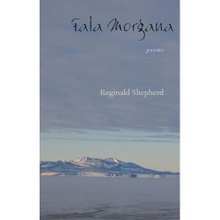
When I wrote “You, Therefore,” which I reproduce below, and which is included in my book Fata Morgana, I was reading a great deal of early Duncan, specifically The Years as Catches: First Poems (1939-1946), published in 1966 by Oyez and now out of print, and The First Decade: Selected Poems 1940-1950, published by Fulcrum Press in 1968 and now also out of print. Duncan always remains open to the immediacy of the moment of composition—“I sought to liberate in language natural powers of the poem itself…in the excitement of the music, I was transported beyond the model into the presence of the poetic intention itself”—even if that transport sometimes leads him astray, into what could be considered poetic error: “It is all wrong my intelligence protests, but it is a commanding confession of my true state.”
The “crisis of truth and permission” of which Duncan writes is one with which I have struggled all my life as a writer, though I have usually taken care (perhaps too much care) not to let permission permit error. But nonetheless, reading these early poems of Duncan’s gave me a permission, allowed me (in poet John Gallaher’s phrase) to write “You, Therefore,” a more open, less careful, and less guarded poem than I usually allowed myself:
Often I am permitted to return to a meadow
…
that is a place of first permission,
everlasting omen of what is.
That, and the security of a real-life interlocutor to my words, the knowledge that I was no longer speaking to and into an absence, or at best a phantom presence I had myself to conjure up. I was no longer writing simulacra of feelings I imagined having about men I’d never met or men who never existed, mourning lost loves I’d never had. This real presence provides the possibility of the poetic projection of male homoeroticism as a mode of transcendence and even salvation in the company of a beloved other rather than of abjection and self-abnegation before unattainable figures of a real but too highly figured, and always blocked, desire.
You, Therefore
For Robert Philen
You are like me, you will die too, but not today:
you, incommensurate, therefore the hours shine:
if I say to you “To you I say,” you have not been
set to music, or broadcast live on the ghost
radio, may never be an oil painting or
Old Master’s charcoal sketch: you are
a concordance of person, number, voice,
and place, strawberries spread through your name
as if it were budding shrubs, how you remind me
of some spring, the waters as cool and clear
(late rain clings to your leaves, shaken by light wind),
which is where you occur in grassy moonlight:
and you are a lily, an aster, white trillium
or viburnum, by all rights mine, white star
in the meadow sky, the snow still arriving
from its earthwards journeys, here where there is
no snow (I dreamed the snow was you,
when there was snow), you are my right,
have come to be my night (your body takes on
the dimensions of sleep, the shape of sleep
becomes you): and you fall from the sky
with several flowers, words spill from your mouth
in waves, your lips taste like the sea, salt-sweet (trees
and seas have flown away, I call it
loving you): home is nowhere, therefore you,
a kind of dwell and welcome, song after all,
and free of any eden we can name
As Lani Guinier, Clinton’s failed nominee for attorney general, said in a 1994 interview in the magazine Vibe, “if you show too much emotion of whatever kind, that then defines you forever, and you don’t have the opportunity to present yourself in any nuanced or multifaceted way.” It sometimes seems that to express emotion, let alone passion, is to be marked as de trop by definition. Emotion is only allowed vicarious (and stereotyped) emotional expression by means of music, movies, and television, which offer up reified, commodified (and sterilized) versions of feeling. As Roland Barthes, as quoted in the Financial Times, of all places, once said, “What the public wants is not passion but the appearance of passion.”
Robert Duncan is a passionate poet and a poet of passion, verbal, emotional, and intellectual. His work is sometimes dismissed as sentimental. Critic M.L. Rosenthal so dismissed the opening lines of “A Sequence of Poems for H.D.’s 73rd Birthday,” from Roots and Branches [Rosenthal mis-cites the poem’s title], in his 1967 book The New Poets:
The young Japanese son was in love with a servant boy.
To be in love! Dont you remember how the whole world is governed
by a fact that embraces
everything that happens?
The passage goes in this vein for several more lines, concluding with “And youth in love with youth!” before veering off in a more mystical direction. Rosenthal’s discussion, in which “I will not say that such a passage is an imposition on the heterosexual reader” (as if homosexual readers have not been imposed upon for centuries), and in which he denigrates the passage’s emotional exuberance as a “girlish outcry,” has more than a whiff of homophobia—the expression of homosexual passion or desire is by definition “too much,” “excessive.” Rosenthal is more approving when Duncan writes of the pain and shame of homosexual desire, as in “Sonnet 1”:
Now there is a Love of which Dante does not speak unkindly,
Tho it grieves his heart to think upon men
who lust after men and run.
Sometimes Duncan’s poetry is sentimental. That is to say, sometimes the excess feels gross rather than fine, willful rather than felt, like a performance. As Wallace Stevens noted, sentimentality is not a surplus of feeling but a failure of feeling. But that is not Duncan at his best.
I am impressed by the unabashed and unembarrassed lyrical and emotional exuberance of Duncan’s poetry, the utter absence of irony or defensive self-consciousness. Not that Duncan is unself-consciousness (far from it), but self-awareness is not used as a shield or a weapon. As poet Brian Teare writes in his essay “A Drama of Truth”, “it’s Duncan’s lack of irony about his vocation, as well as [about] the possibilities and functions of both imagination and language, that makes him most vulnerable to our postmodern distrust.” On his web log, The Rest Is Noise, music critic Alex Ross writes in similar terms about Italian opera composer Giacomo Puccini that, “despite his popularity, [Puccini] creates discomfort in this hyper-stylized, ironic age, because he deals in direct emotion, [and] avoids ideology and moralism.”
Long ago an undergraduate poetry professor told us not to let irony become a pet, which too many poets these days have done: that is, when they haven’t in fact become irony’s pets. Irony is too often used as an evasion, a way to disclaim responsibility for one’s statements and one’s feelings, or even for pretending one doesn’t have feelings, which can be so disruptive, even disturbing, so messy and uncool. As Louise Glück has written from a more generous-minded viewpoint, “Too often distaste for sentiment, anxiety at the limitations of the self, create contempt for feeling, as though feeling were what was left over after the great work of the mind was finished” (“Foreword” to Frail-Craft by Jessica Fisher, xv).
While Eliot wrote that “Poetry is not a turning loose of emotion, but an escape from emotion,” he also pointed out that “only those who have personality and emotions know what it means to want to escape from these things” (Selected Prose of T.S. Eliot, 43). Too many younger American poets want not just to escape from emotions but to have none. Flippancy and sarcasm can be a way of dealing with emotional pain, of distancing it and making it easier to handle, in the way that one dons protective gear to handle volatile materials. They’re very popular in American poetry today. But there are more challenging and interesting ways to engage emotion while avoiding sentimentality. Being cool doesn’t leave much room for depth or exploration, for risk or for surprising oneself. As Marianne Moore writes in her essay “Idiosyncrasy and Technique,” “We are suffering from too much sarcasm, I feel. Any touch of unfeigned gusto in our smart press is accompanied by an arch word implying, ‘Now to me, of course, this is a bit asinine.’... Blessed is the man who does not sit in the seat of the scoffer.” Irony and sarcasm aren’t the same thing, though they’re often confused. Irony always takes what it addresses seriously.
In Duncan’s poetry, one affected not so much by the feeling per se (anyone can feel, or almost anyone), but by the willingness to be seen to feel, the open performance of feeling (the poem, after all, is not a person—it feels nothing, though at its best it embodies and enacts emotion and thought and their interactions), a feeling that may appear excessive or inappropriate from a less sympathetic point of view. But Duncan, at his best, makes his excesses artful, his inappropriateness movingly defiant rather than embarrassing, as it so easily could be.
When I wrote “You, Therefore,” which I reproduce below, and which is included in my book Fata Morgana, I was reading a great deal of early Duncan, specifically The Years as Catches: First Poems (1939-1946), published in 1966 by Oyez and now out of print, and The First Decade: Selected Poems 1940-1950, published by Fulcrum Press in 1968 and now also out of print. Duncan always remains open to the immediacy of the moment of composition—“I sought to liberate in language natural powers of the poem itself…in the excitement of the music, I was transported beyond the model into the presence of the poetic intention itself”—even if that transport sometimes leads him astray, into what could be considered poetic error: “It is all wrong my intelligence protests, but it is a commanding confession of my true state.”
The “crisis of truth and permission” of which Duncan writes is one with which I have struggled all my life as a writer, though I have usually taken care (perhaps too much care) not to let permission permit error. But nonetheless, reading these early poems of Duncan’s gave me a permission, allowed me (in poet John Gallaher’s phrase) to write “You, Therefore,” a more open, less careful, and less guarded poem than I usually allowed myself:
Often I am permitted to return to a meadow
…
that is a place of first permission,
everlasting omen of what is.
That, and the security of a real-life interlocutor to my words, the knowledge that I was no longer speaking to and into an absence, or at best a phantom presence I had myself to conjure up. I was no longer writing simulacra of feelings I imagined having about men I’d never met or men who never existed, mourning lost loves I’d never had. This real presence provides the possibility of the poetic projection of male homoeroticism as a mode of transcendence and even salvation in the company of a beloved other rather than of abjection and self-abnegation before unattainable figures of a real but too highly figured, and always blocked, desire.
You, Therefore
For Robert Philen
You are like me, you will die too, but not today:
you, incommensurate, therefore the hours shine:
if I say to you “To you I say,” you have not been
set to music, or broadcast live on the ghost
radio, may never be an oil painting or
Old Master’s charcoal sketch: you are
a concordance of person, number, voice,
and place, strawberries spread through your name
as if it were budding shrubs, how you remind me
of some spring, the waters as cool and clear
(late rain clings to your leaves, shaken by light wind),
which is where you occur in grassy moonlight:
and you are a lily, an aster, white trillium
or viburnum, by all rights mine, white star
in the meadow sky, the snow still arriving
from its earthwards journeys, here where there is
no snow (I dreamed the snow was you,
when there was snow), you are my right,
have come to be my night (your body takes on
the dimensions of sleep, the shape of sleep
becomes you): and you fall from the sky
with several flowers, words spill from your mouth
in waves, your lips taste like the sea, salt-sweet (trees
and seas have flown away, I call it
loving you): home is nowhere, therefore you,
a kind of dwell and welcome, song after all,
and free of any eden we can name
Thursday, March 6, 2008
My New Anthology

My new new book (after my recent essay collection, Orpheus in the Bronx), Lyric Postmodernisms: An Anthology of Contemporary Innovative Poetries, has recently been published by the new and small but quite excellent Counterpath Press, who have published books by Laynie Browne, Brian Henry, and Andrew Joron, among others.
Marjorie Perloff writes of the book that "Like the best of museum curators, Reginald Shepherd has trusted his own poet’s eye and ear in assembling poems by twenty-three of our best (mostly younger) poets—poets not usually linked, belonging, as they do, to different schools and movements. From Rosmarie Waldrop’s ironic prose poems ('I gave up stress for distress') to Cole Swensen’s elegant ekphrastic prose, from C. S. Giscombe’s minimalist geographies to Susan Stewart’s resonant mythic landscapes, the dominant impression—rare today—produced by this lyric assemblage is that of quality—the sure hand of those who have mastered their craft and can therefore Make It New. This is a truly exciting and memorable anthology!"
Charles Altieri writes that “All the anthologies of contemporary poetry I know are far too generous. They seem incapable of excluding almost anyone who has gained any reputation, and then they have to compensate for their breadth by such scanty selections there is no possibility of depth. Not so with Reginald Shepherd’s Lyric Postmodernisms. Shepherd had the courage to select 23 poets—spanning two generations—then offer them enough space to provide statements on their aesthetics, display their range (including selections from long poems and uncollected texts). This anthology treats poets not just as makers of objects but as thinkers with visible and engaging projects, who bring lyric consciousness into almost every domain of active life. . . . Here 'lyric' can have its fullest meaning only if there are many more than one postmodernism, as Shepherd elaborates in his brilliant and concise introduction.”
I am grateful to them both for these generous and eloquent endorsements.
Lyric Postmodernisms gathers twenty-three established poets whose work crosses and transcends the boundaries between traditional lyric and avant-garde experimentation. Some have been publishing since the 1960s, some have emerged more recently, but all have been influential on newer generations of American poets. Many of these poets are usually not thought of together, being considered as members of different poetic camps, but they nonetheless participate in a common project of expanding the boundaries of what can be said and done in poetry. This anthology sheds new light on their work, creating a new constellation of contemporary American poetry.
These poets explore and discover new territories in the intersections between lyric enchantment and experimental investigation: they innovate and interrogate while still drawing upon and incorporating the lyric past and present; their critical art is also a celebration and renewal of the riches of the lyric tradition.
The book includes generous selections from each poet, so that a reader can get a sense of the writer’s work as a whole, and wherever possible I also include uncollected work that, even if published, might be difficult to track down. It is important to include a substantial representation of each poet’s work, rather than a cursory sampling, since it's often a poet’s other work that teaches us how to read any given poem of hers or his. I also include aesthetic statements from each contributor. Such statements, in which contributors discuss their work, their influences, their aims, and their poetics, situate and provide points of entry for these diverse and complex poetries.
The book includes work by Bruce Beasley, Martine Bellen, Mei-mei Berssenbrugge, Gillian Conoley, Kathleen Fraser, Forrest Gander, C. S. Giscombe, Peter Gizzi, Brenda Hillman, Claudia Keelan, Timothy Liu, Nathaniel Mackey, Suzanne Paola, Bin Ramke, Donald Revell, Martha Ronk, Aaron Shurin, Carol Snow, Susan Stewart, Cole Swensen, Rosmarie Waldrop, Marjorie Welish, and Elizabeth Willis.
I encourage anyone interested in "that kind of poetry" (whatever labels one chooses or refuses for it) to take a look at this book.
Friday, February 29, 2008
Defining "Post-Avant-Garde" Poetry
This is a considerably revised and expanded version of a piece that I originally posted on the Poetry Foundation’s Harriet blog, where it incited a quite extensive and vociferous response. I hope that the discussion here, should there be any, will be more calm and reasonable.
I appreciate the attention (including reasoned and productive disagreement) the original piece received from Robert Archambeau, Christian Bök, Joshua Corey, John Gallaher, and Paul Hoover, not to mention the two citations on the Chronicle of Higher Education web site. This revision has benefited from their thoughtful discussions.
*
The phrase "post-avant poetry," which was either coined seriously by Ron Silliman or parodically by Joan Houlihan, is bandied about quite a bit in the online poetry world. (I’ve never seen the phrase in print, an indication of how separate the two realms often are, though many people participate in both.) It’s used with the assumption that "we all know what that is," but the term is rarely defined. Here follows my attempt to pin down a term much-mentioned but seldom specified, with the caveat that Stephen Burt makes in a postscript to his essay on what he calls “The Elliptical Poets”: “People who follow the arts like to talk about schools; often they prefer talking about schools and trends to talking about individual poets and their poems” (48). I hope that this too-broad discussion is not taken as a substitute for discussing actual poets and actual poems.
"Post-avant" (as in, "post-avant-garde"—insider groups love shorthand) poets can be described as writers who, at their best, have imbibed the lessons of the modernists and their successors in what might be called the experimental or avant-garde stream of American poets, including the Objectivists (especially Oppen and Zukofsky), what have been called the New American Poetries, particularly the Projectivist/Black Mountain School and the New York School(s), from Jack Spicer and Robert Duncan to John Ashbery and Frank O’Hara, and the Language poets (including such poets and polemicists as Charles Bernstein and Ron Silliman), without feeling the need (as so many other poetic formations have) to pledge allegiance to a particular group identity (the poetry world is full of fence-building and turf wars) or a particular mode of proceeding artistically. As poet Elizabeth Willis writes in her artist’s statement in my anthology Lyric Postmodernisms, “part of what’s so interesting about the current moment is its refusal of an overtly oedipal relation to literary traditions on either the right or the left, and a willingness to construct and invent not only new kinds of poetry but new ways of reading.”
These poets don’t form a movement, let alone a school, but something more like a set of tendencies. As Stephen Burt writes, “Whether a school exists, or where its boundaries lie, seem…questions both less profound, and less durable, than the questions we ask about each poet and about individual poems. At the same time individual poems may respond to their historical moment and invoke their stylistic [formal, and thematic] affinities with other poems” (50).
Poet and editor Rebecca Wolff writes of the work in her journal Fence, a home of the post-avant (along with such journals as Boston Review, Colorado Review, Denver Quarterly, New American Writing, Verse, and Volt, and such publishers as Ahsahta Press, the University of California Press, the late lamented University of Georgia Press Contemporary Poetry Series, and Wesleyan University Press), such writing “intentionally blurs the distinction between 'difficulty' and 'accessibility,' preferring instead to address a continuum of utterance.” Though many of these poets have projects and even systems (the book, as distinct from or even opposed to the individual poem, is important in much of their work), there aren’t a lot of programs. There’s much prose writing and thinking about poetry, and there are many, many blogs (this is a very wired “generation,” and much sense of post-avant poetic community is produced online), but not many manifestoes. (Flarf, which poet Kasey Mohammad has defined as “intentionally bad poetry that involves Google search text results,” a deliberate anti-poetry based on what Dan Hoy has called “poetics of awfulness as a style,” is probably not “post-avant,” but I don’t understand it well enough to discuss it.) And no doubt I’ve missed a lot—there’s a lot to miss.
In his 1997 article “The New Modernism” (reprinted in his essay collection Fables of Representation), poet and editor Paul Hoover writes that “Compositional complexity and a renewed emphasis on abstraction are the cornerstones of the new modernism. It has some of the difficulty of modernism but little of its commitment to history and myth. [RS: I would disagree with this. I would say that it has a different relationship to history and myth, not relying upon them as sources of authority but as fields of what Foucault called the archaeology of knowledge.] In its love of the fragment, mosaic organization, broken sequences, and appropriation, the new modernism also resembles the old. What differs is the gender and ethnicity of the poets involved” (138). That is to say, the new modernism is much more diverse in terms of gender, race, and ethnicity (though not necessarily of class) than the old modernism ever was or wanted to be. Hoover’s category of “the new modernism” is much more broad than my notion of the “post-avant-garde,” as he traces out two branches. The first branch includes “poets like Ann Lauterbach, Marjorie Welish, Michael Palmer, Jorie Graham, Rosmarie Waldrop, Nathaniel Mackey, Donald Revell, and Bob Perelman [RS: this seems an odd assemblage to me, at least in terms of professed and apparent poetic lineages] whose work contains figured abstraction and, at times, sustained lyrical argument and are influenced by the romantic lineage of postmodernism including Ashbery and Duncan.” The second branch includes “poets like Lyn Hejinian, Susan Howe, Bruce Andrews, Ron Silliman, and Charles Bernstein whose origins are in Gertrude Stein, objectivism, and Charles Olson and employ a more discontinuous compositional program” (139). I would call this a distinction between romantic and anti-romantic Modernist lineages, between a lyric postmodernist mode and an anti-lyrical postmodernist mode. I would place most of the poets I consider as “post-avant garde” within the former lineage and mode, however much they query and sometimes explode (from the inside) romanticism and lyricism.
Poet and critic Stephen Burt’s invention of a school of so-called Elliptical poetry, including such diverse poets as Lucie Brock-Broido, Forrest Gander, August Kleinzahler, Thylias Moss, Karen Volkman, and C.D. Wright, has been much talked-about, including in a symposium in the journal American Letters and Commentary. Burt writes in his 1999 essay “The Elliptical Poets” that “Elliptical Poets are always hinting, punning, or swerving away from a never-quite-unfolded backstory; they are easier to process in parts than in wholes. They believe provisionally in identities (in one or more “I” per poem), but they suspect the I’s they invoke: they admire disjunction and confrontation, but they know how [a] little can go a long way. Elliptics seek the authority of the rebellious; they want to challenge their readers, violate decorum, surprise or explode assumptions about what belongs in a poem, or what matters in life, and to do so while meeting traditional lyric goals. Their favorite attitudes are desperately extravagant, or tough-guy terse, or defiantly childish: they don't believe in, or seek, a judicious tone” (41). Burt goes on to write that “All [Elliptical poets] want to convey both metaphysical challenge and recognizable, seen or tasted, detail. Ellipticism rejects: poems written in order to demonstrate theories; prettiness as its own end; slogans; mysticism; straight-up narrative; and extended abstraction. [RS: Contrarily, I would say that one distinguishing feature of post-avant-garde poetry is its interest and even its investment in exploring abstraction as a mode and a theme, something that Paul Hoover touches on in the passage quoted above.] Ellipticals are uneasy about (less often, hostile to) inherited elites and privileges, but they are not populists, and won't write down to, or connect the dots for, their readers; their difficulty conveys respect.” (This last assertion is echoed and complicated by Rebecca Wolff’s comment noted above.)
Burt’s Ellipticist poets seem to have in common only a set of surface effects: they all write flashy poems. Indeed, many of them have queried if not rejected their assigned membership in this school. Cole Swensen, for example, asserts in “Elliptical Poetry: A Response,” that Burt “is listing traits that have been present in various innovative writing communities for decades and attributing them to a very narrow, and relatively both conservative and recent, group of writers” (American Letters and Commentary 11, 1999, 66).
And I am not sure what makes these specifically “elliptical.” My Merriam Webster Dictionary defines “elliptical” as “a : of, relating to, or marked by ellipsis or an ellipsis [in turn defined as ‘a: the omission of one or more words that are obviously understood but that must be supplied to make a construction grammatically complete, or b: a sudden leap from one topic to another’]; b (1): of, relating to, or marked by extreme economy of speech or writing (2): of or relating to deliberate obscurity (as of literary or conversational style)” As Burt describes his “Ellipticist” poets, none of these definitions seems particularly to apply, at least no more than they would to any number of poets from John Donne to Emily Dickinson to John Berryman to Ann Lauterbach (whom he does not mention).
In “Shearing Away,” an earlier version of his essay that appeared in the Spring 1998 issue of the British journal Poetry Review, Burt admits to having made up this soi-disant “school.” Later, in clarifying what he means by “school,” he writes that “Ellipticism counts as a school of a movement in the way that ‘metaphysical poetry’ or ‘confessional poetry’ count as movements, not in the way that ‘language writing’ or the Black Arts Movement or New Formalism (each of which had manifestos) count as movements; the so-called [by Burt himself] Ellipticals (like the so-called metaphysicals) need not have signed a manifesto, or appeared in one place at one time, in order to share the aesthetic goals I have described” (49). I would say that they share at most aesthetic tendencies and styles, rather than goals, which are always difficult to decipher in any case.
As Cole Swensen points out, “Historically, a school is based is based on more than observable surface similarities….Sometimes, in fact, the members of a given group have differed widely in their works’ appearances, approaches, and other immediate aspects, and have based their affinity instead on much broader aesthetic issues, as well as, at times, shared social and political convictions and some degree of shared experience. As the term has been used throughout the century, a school is a spontaneous and accidental situation that laces people together as it laces art into individual lives….using the term at this point in history does imply those extra-textual affinities, which I’m not sure are appropriate here” (op. cit. 65). Swensen also points out the ways in which Burt’s map seems “if not to construct, then at least to arrange [the] territory before it sets out to guide us through it” (ibid.): it draws factional lines in advance through a future that hasn’t yet arrived.
In a recent review of Matthea Harvey’s new book Modern Life, critic David Orr concurs with Burt’s description, but he frames it in pejorative terms. Orr writes that Harvey works in “a variation on the trendiest contemporary style, which relies heavily on disconnected phrases, abrupt syntactical shifts, attention-begging titles (‘The Gem Is on Page Sixty-Four’), quirky diction (‘orangery,’ ‘aigrettes’), flickering italics, oddball openings (‘The scent of pig is faint tonight’) and a tone ranging from daffy to plangent—basically, two scoops of John Ashbery and a sprinkling of Gertrude Stein. It’s not hard to write acceptable poetry in this mode.” While this description is true of many writers (any mode has its better and its worse practitioners, and mediocrity is the norm in any field of endeavor), I don’t find it fair as an overall evaluation. In fact, Orr’s review of Harvey’s work is quite positive. As he points out, “if it’s relatively easy to write passable poetry in the style du jour, it’s never easy to write good poetry in any style,” which seems to me much more to the point.
Some of these writers have been called “third way” writers by Ron Silliman, who has written that “Younger poets today I think have more of an opportunity of learning from all worlds without having to sign up & pick sides. And that in turn will itself impact how writing gets done, going forward.” However, Silliman distinguishes what he calls “third way” writing (among whose practitioners he numbers Forrest Gander, Jorie Graham, Robert Hass [RS: I can't see Hass's avant-garde inclinations], and Ann Lauterbach, as well as the much younger Graham Foust), which exemplifies “a post-militant American poetics,” from “post-avant” writing, saying that “third way” poetry is dependent on the dichotomy between what he calls post-avant poetry and what he pejoratively calls “School of Quietude” poetry: “the Third Way has always struck me as predicated upon the existence of the other two.” This indicates that he still maintains a distinction between vanguardist and rear-guardist contemporary American poetry, one that I believe no longer applies.
Critic and poet Calvin Bedient, whom Joshua Corey has called “one of the most passionate advocates of a return to lyric modernism in contemporary poetry,” has briefly referred to this kind of poetry as “soft” avant-garde, as distinct from the hard (and didactic) kind still associated with (what remains of) Language writing. I have called some of their work, after Wittgenstein, “lyrical investigations” in the introduction to my new anthology Lyric Postmodernisms: An Anthology of Contemporary Innovative Poetries, to which I will devote a later post. (You didn’t think I’d let an opportunity for self-promotion slip by, did you?)
Post-avant writers tend to eschew the standard and standardized autobiographical or pseudo-autobiographical anecdote which predominates in what’s called (usually pejoratively) “mainstream” poetry. Indeed, they frequently problematize and question the notions of self and of personal experience. But they don’t just discard the self as some kind of ideological illusion. As well, they tend to avoid or at least seriously complicate narrative, often breaking story down into its component parts. They incorporate fracture and disjunction without enthroning it as a ruling principle (poet Cynthia Cruz calls much of this work “the broken lyric”). They are interested in exploring, interrogating, and sometimes exploding language, identity, and society, without giving up on the pleasures, challenges, and resources of the traditional lyric. Their work combines the lyric’s creative impulse with the critical project of Language poetry, engaging the dialectic of what critic Charles Altieri calls lyricism and lucidity and what, earlier, W.H. Auden called enchantment and disenchantment without settling on one side or the other.
In Stephen Burt's words, they are “trying to figure out how to incorporate both lyric and non- (if not anti-) lyric impulses, and trying…to put modernist fragmentation together with Romantic expectations about voice and form,” and without any preconceptions about what forms such a potential synthesis might take. Theirs is a magpie-like eclecticism, that draws from whatever materials, traditions and techniques are of interest and of use, however seemingly incompatible, however ideologically opposed historically. They don't try to destroy the past for the sake of the future, or trumpet teleological notions of artistic "progress" or "advance," though they are fascinated with the processes of poetic construction. As poet Robert Archambeau has recently written, “The post-avant seems to have very little interest in making grand claims of any kind: not only does it eschew a sense of heroic poetic progress, but it eschews big political or spiritual claims.” Perhaps this is a reflection of the postmodern rejection or at least suspicion of grand narratives and transcendental signifiers.
*
This cross-fertilization has been happening in American poetry for a long time, but there are many people on various “sides” who either don’t see it or vehemently oppose it, perhaps because it undermines their own carefully constructed identity formations (which many of them conceive of as having been forged under fire). Hardcore avant-gardistes, as well as hardcore defenders of a narrow and reified “tradition,” are at this point both ideologically and aesthetically backward: they’re still fighting the poetry cold wars. But as editor Christopher Beach writes in the introduction to Artifice and Indeterminacy, his “anthology of new poetics,” “any such unqualified agenda of poetic and institutional identification [as Donald M. Allen proclaimed when he pronounced that all the poets included in The New American Poetry shared ‘a total rejection of all those qualities typical of academic verse’] would seem inappropriate and somewhat naïve; we have seen the blurring of such clear distinctions as those between ‘academic’ and ‘non-academic’ schools of poetry, between institutional structures and avant-garde communities, between insiders and outsiders” (vii).
The avant-garde isn’t the advance guard anymore, and hasn’t been for a while. The armies have been disbanded, though many of the officers have yet to inform themselves of the fact. There are, of course, many people who haven’t yet passed through the avant-garde and never will. (It would be nice if some of those people would at least read Eliot. But then, it would be nice if some of those people would read Keats.) But once you have passed through that avant-garde door, there is no forward march, no destination or telos, just an open field. In the somewhat exaggerated words of philosopher and art critic Arthur C. Danto, “there are to be no next things. The time for next things is past. [RS: nice paradox.] It [is] like coming to the end of the world with no more continents to discover. One must now begin to make habitable the only continents that there are” (The State of the Art 217). Visual artist turned poet Kenneth Goldsmith, who might or might not accept a characterization as a “post-avant” poet, writes in his post "The End of History" on the Poetry Foundation’s Harriet blog that “Language Poetry put the period on the end of the modernist sentence. If you're playing an innovative game, after Language Poetry, there’s no more deconstructive work to do. That project has finished. The next step then becomes a reconstructive project that sees language as a whole again--moving information--but, like certain strains of postmodernism, acknowledges the cracks in the newly reformed linguistic vessel.”
Only because of the backwardness of literature in comparison to music and visual art can self-appointed avant-gardistes still feel themselves in the forefront of artistic morality. In other areas of artistic endeavor, the idea of vanguard art, art in step with the progress of history, and the conviction that some artistic practices are more correct, even more virtuous, has been rather thoroughly abandoned. Goldsmith wryly notes that “I often use [William S. Burroughs collaborator] Brion Gysin’s quote from 1959 that poetry is 50 years behind painting.” As philosopher and literary theorist Daniel Barbiero writes of “the willingness of contemporary poets to use a spectrum of devices without undue prejudice” (87) in Telling It Slant, an anthology of “avant-garde poetics of the 1990s”: “To anyone who has followed the visual arts during the past two decades or so, or academic music in the decade prior to that, the notion of an avant-garde [RS: however or even whether one would define such a thing at this historical juncture] without agonism will not seem very strange” (ibid.). Arthur C. Danto (as I have indicated above), in such books as After the End of Art, Beyond the Brillo Box, and The State of the Art, and music critic Alex Ross, in his brilliant book The Rest Is Noise: Listening to the Twentieth Century, both make this point about, respectively, visual art and music. Ross’s book includes a wonderful 1992 quote from composer John Cage, whose avant-garde credentials are impeccable: “We live in a time I think not of mainstream, but of many streams, or even, if you insist upon a river of time, that we have come to a delta, maybe even beyond delta to an ocean which is going back to the skies” (341). This image of a spatial expanse rather than a road leading to a definite future destination, even if one not known in advance, echoes Danto’s geographical metaphor in my preceding paragraph.
Obviously, experimentation and innovation will and should continue, in the sense of trying something out to see what happens, of engaging in poetic endeavors without knowing or attempting to predetermine the outcome. Poetry is always at least in part a foray into the unknown, a project of finding out what happens in the process of participating in its happening. But the sense of a forward march, of a correct path to the future and a virtuous method by which to reach to that future, is gone, or at least no longer valid. To what destination are the arts, is poetry, marching at this very late date?
My partner Robert Philen, a cultural anthropologist who maintains a brilliant and wide-ranging blog, tells me that the same phenomenon is occurring in the social sciences where, for example, the dichotomies between quantitative and qualitative research are breaking down.
*
As Joshua Clover writes in “Poem, “We lie down in categories/And wake up in concepts” (The Totality for Kids 6) So it’s important to remember that the poets I have described are very diverse and individually distinctive. That’s what makes their work interesting and worth discussing. But their work broadly and variously shares common characteristics that make it a significant area of contemporary poetic activity. There are doubtless many “post-avant” poets who would not recognize themselves in this description. Some would even vehemently reject my description (practitioners of flarf might do so), and some wouldn’t consider themselves “post-avant” at all. Paul Hoover points out that slam, spoken word, and performance poetry constitutes an almost entirely separate world from that of print poetry, aesthetically, conceptually, and materially, with its own networks and institutions. Given that particularity, I don’t attempt to discuss it here.
Some established poets whose work maps out or creates this third space are Michael Anania, Paul Auster (though I don’t know if he still writes poetry), Bruce Beasley, Martine Bellen, Mei-mei Berssenbrugge, Lucie Brock-Broido, Killarney Clary, Gillian Conoley, Carolyn Forché, Kathleen Fraser, Alice Fulton, Forrest Gander, C.S. Giscombe, Peter Gizzi, Jorie Graham, Brenda Hillman, Claudia Keelan, Ann Lauterbach, Timothy Liu, Jane Miller, Michael Palmer, Suzanne Paola, John Peck, Dennis Phillips, Bin Ramke, Stephen Ratcliffe, Donald Revell, Martha Ronk, Peter Sacks, Aaron Shurin, Carol Snow, Susan Stewart, Cole Swensen, Rosmarie Waldrop, Marjorie Welish, Elizabeth Willis, and C.D. Wright. Many of these writers are included in Lyric Postmodernisms: An Anthology of Contemporary Innovative Poetries, edited by moi and just out from Counterpath Press, with generous blurbs from Charles Altieri and Marjorie Perloff.
Some “emerging” or less-established poets who work in this space are Christopher Arigo, Dan Beachy-Quick, Jasper Bernes, Laynie Browne, Brigitte Byrd, Julie Carr, Jeff Clark, Joshua Clover, Joshua Corey, Cynthia Cruz, Jocelyn Emerson, Amy England, Lisa Fishman, Graham Foust, John Gallaher, Michele Glazer, Noah Eli Gordon, Matthea Harvey, Brian Henry, Joan Houlihan, Christine Hume, Catherine Imbriglio, Julie Kalendek, Joanna Klink, Joshua Kryah, Joseph Lease, Malinda Markham, Mark McMorris, Rusty Morrison, Jenny Mueller, Laura Mullen, Amy Newman, Geoffrey Nutter, Geoffrey G. O’Brien, Tracy Philpot, D.A. Powell, Heather Ramsdell, Rebecca Reynolds, Brenda Shaughnessy, ‘Annah Sobelman, Brian Teare, Karen Volkman, G.C. Waldrep, Joshua Marie Wilkinson, Tyrone Williams, Sam Witt, Andrew Zawacki, and Rachel Zucker. Many of these writers are included in my Iowa Anthology of New American Poetries, published by the University of Iowa Press in 2004.
This is not meant to be a comprehensive list, or even a list of all the poets whose work I enjoy who write “that kind of poetry” (as Joan Houlihan writes that editors refer to it), but just the starting point for a discussion of a phenomenon much mentioned but rarely defined or described, one that Joshua Corey proposes as “the new American mainstream, retaining whatever oppositional force it still possesses only through institutional memory—though it still stands strongly enough as a bulwark against the laziness and anti-intellectualism of the genuine mainstream of American cultural life.”
*
The stormy reception the original version of this piece received at the Poetry Foundation web site indicates that there are many people who believe (or act as if they believe) that we still live in the stultified and stultifying poetic culture of the Nineteen Fifties (in which there was still more going on than people choose to remember or credit), and cultivate a sense of themselves as rebels against a monolithic literary orthodoxy that no longer exists, if it ever really did. As intellectual historian Peter Gay points out in his book Modernism: The Lure of Heresy, if the bourgeois audience had really been as monolithically or rigidly philistine as they were and have since been portrayed as being, then modernism would never have become successful, let alone institutionalized.
Many maintain this sense of themselves as marginalized outsiders, if not downright victims, no matter how comfortably ensconced they are within what Louis Althusser (a highly problematic thinker who nonetheless produced some useful ideas) called the ideological state apparatus of higher education, or just within the literary world in general. (It also needs reminding that, closely entwined as they are in the current American situation, academia and the literary world are not identical.) As the wonderful poet Michael Anania once said to me, if you continue to cultivate a sense of grievance and victimization once you become successful (or if you were never an outsider to begin with, as is the case with many people who identify themselves as transgressors and subversives), then you just become a jerk. (He used a stronger word, but I’m trying to be polite.)
I close with a quote from poet Brenda Hillman’s essay “On Song, Lyric, and Strings,” about the nature, place, and role of the lyric in today’s “post”-everything world, from which I also quote in my introduction to Lyric Postmodernisms):
“Current aesthetic quarrels and conversations between poets are real enough, and the aesthetically abstract or non-referential lyric poetry may have a different readership from poetry that announces its purposes in more narrative styles, but these issues should concern poets far less than keeping poetry alive in a culture of appalling greed, a culture that doesn't read much of anything, a culture that does business as usual in a time of Enron and retributionist wars.”
Would that more people could keep these wise words in mind.
Works Cited
Beach, Christopher, ed. Artifice and Indeterminacy: An Anthology of New Poetics. Tuscaloosa: University of Alabama Press, 1998.
Burt, Stephen. “The Elliptical Poets.” Reprinted in Jerry Harp and Jan Weismiller, eds., A Poetry Criticism Reader. Iowa City: University of Iowa Press, 2006.
Danto, Arthur C. The State of the Art. New York: Prentice Hall Press, 1987.
Hoover, Paul. Fables of Representation. Ann Arbor: University of Michigan Press, 2004.
Ross, Alex. The Rest Is Noise: Listening to the Twentieth Century. New York: Farrar Straus Giroux, 2007.
Wallace, Mark, and Steven Marks, eds. Telling It Slant: Avant-Garde Poetics of the 1990s. Tuscaloosa: University of Alabama Press, 2002.
I appreciate the attention (including reasoned and productive disagreement) the original piece received from Robert Archambeau, Christian Bök, Joshua Corey, John Gallaher, and Paul Hoover, not to mention the two citations on the Chronicle of Higher Education web site. This revision has benefited from their thoughtful discussions.
*
The phrase "post-avant poetry," which was either coined seriously by Ron Silliman or parodically by Joan Houlihan, is bandied about quite a bit in the online poetry world. (I’ve never seen the phrase in print, an indication of how separate the two realms often are, though many people participate in both.) It’s used with the assumption that "we all know what that is," but the term is rarely defined. Here follows my attempt to pin down a term much-mentioned but seldom specified, with the caveat that Stephen Burt makes in a postscript to his essay on what he calls “The Elliptical Poets”: “People who follow the arts like to talk about schools; often they prefer talking about schools and trends to talking about individual poets and their poems” (48). I hope that this too-broad discussion is not taken as a substitute for discussing actual poets and actual poems.
"Post-avant" (as in, "post-avant-garde"—insider groups love shorthand) poets can be described as writers who, at their best, have imbibed the lessons of the modernists and their successors in what might be called the experimental or avant-garde stream of American poets, including the Objectivists (especially Oppen and Zukofsky), what have been called the New American Poetries, particularly the Projectivist/Black Mountain School and the New York School(s), from Jack Spicer and Robert Duncan to John Ashbery and Frank O’Hara, and the Language poets (including such poets and polemicists as Charles Bernstein and Ron Silliman), without feeling the need (as so many other poetic formations have) to pledge allegiance to a particular group identity (the poetry world is full of fence-building and turf wars) or a particular mode of proceeding artistically. As poet Elizabeth Willis writes in her artist’s statement in my anthology Lyric Postmodernisms, “part of what’s so interesting about the current moment is its refusal of an overtly oedipal relation to literary traditions on either the right or the left, and a willingness to construct and invent not only new kinds of poetry but new ways of reading.”
These poets don’t form a movement, let alone a school, but something more like a set of tendencies. As Stephen Burt writes, “Whether a school exists, or where its boundaries lie, seem…questions both less profound, and less durable, than the questions we ask about each poet and about individual poems. At the same time individual poems may respond to their historical moment and invoke their stylistic [formal, and thematic] affinities with other poems” (50).
Poet and editor Rebecca Wolff writes of the work in her journal Fence, a home of the post-avant (along with such journals as Boston Review, Colorado Review, Denver Quarterly, New American Writing, Verse, and Volt, and such publishers as Ahsahta Press, the University of California Press, the late lamented University of Georgia Press Contemporary Poetry Series, and Wesleyan University Press), such writing “intentionally blurs the distinction between 'difficulty' and 'accessibility,' preferring instead to address a continuum of utterance.” Though many of these poets have projects and even systems (the book, as distinct from or even opposed to the individual poem, is important in much of their work), there aren’t a lot of programs. There’s much prose writing and thinking about poetry, and there are many, many blogs (this is a very wired “generation,” and much sense of post-avant poetic community is produced online), but not many manifestoes. (Flarf, which poet Kasey Mohammad has defined as “intentionally bad poetry that involves Google search text results,” a deliberate anti-poetry based on what Dan Hoy has called “poetics of awfulness as a style,” is probably not “post-avant,” but I don’t understand it well enough to discuss it.) And no doubt I’ve missed a lot—there’s a lot to miss.
In his 1997 article “The New Modernism” (reprinted in his essay collection Fables of Representation), poet and editor Paul Hoover writes that “Compositional complexity and a renewed emphasis on abstraction are the cornerstones of the new modernism. It has some of the difficulty of modernism but little of its commitment to history and myth. [RS: I would disagree with this. I would say that it has a different relationship to history and myth, not relying upon them as sources of authority but as fields of what Foucault called the archaeology of knowledge.] In its love of the fragment, mosaic organization, broken sequences, and appropriation, the new modernism also resembles the old. What differs is the gender and ethnicity of the poets involved” (138). That is to say, the new modernism is much more diverse in terms of gender, race, and ethnicity (though not necessarily of class) than the old modernism ever was or wanted to be. Hoover’s category of “the new modernism” is much more broad than my notion of the “post-avant-garde,” as he traces out two branches. The first branch includes “poets like Ann Lauterbach, Marjorie Welish, Michael Palmer, Jorie Graham, Rosmarie Waldrop, Nathaniel Mackey, Donald Revell, and Bob Perelman [RS: this seems an odd assemblage to me, at least in terms of professed and apparent poetic lineages] whose work contains figured abstraction and, at times, sustained lyrical argument and are influenced by the romantic lineage of postmodernism including Ashbery and Duncan.” The second branch includes “poets like Lyn Hejinian, Susan Howe, Bruce Andrews, Ron Silliman, and Charles Bernstein whose origins are in Gertrude Stein, objectivism, and Charles Olson and employ a more discontinuous compositional program” (139). I would call this a distinction between romantic and anti-romantic Modernist lineages, between a lyric postmodernist mode and an anti-lyrical postmodernist mode. I would place most of the poets I consider as “post-avant garde” within the former lineage and mode, however much they query and sometimes explode (from the inside) romanticism and lyricism.
Poet and critic Stephen Burt’s invention of a school of so-called Elliptical poetry, including such diverse poets as Lucie Brock-Broido, Forrest Gander, August Kleinzahler, Thylias Moss, Karen Volkman, and C.D. Wright, has been much talked-about, including in a symposium in the journal American Letters and Commentary. Burt writes in his 1999 essay “The Elliptical Poets” that “Elliptical Poets are always hinting, punning, or swerving away from a never-quite-unfolded backstory; they are easier to process in parts than in wholes. They believe provisionally in identities (in one or more “I” per poem), but they suspect the I’s they invoke: they admire disjunction and confrontation, but they know how [a] little can go a long way. Elliptics seek the authority of the rebellious; they want to challenge their readers, violate decorum, surprise or explode assumptions about what belongs in a poem, or what matters in life, and to do so while meeting traditional lyric goals. Their favorite attitudes are desperately extravagant, or tough-guy terse, or defiantly childish: they don't believe in, or seek, a judicious tone” (41). Burt goes on to write that “All [Elliptical poets] want to convey both metaphysical challenge and recognizable, seen or tasted, detail. Ellipticism rejects: poems written in order to demonstrate theories; prettiness as its own end; slogans; mysticism; straight-up narrative; and extended abstraction. [RS: Contrarily, I would say that one distinguishing feature of post-avant-garde poetry is its interest and even its investment in exploring abstraction as a mode and a theme, something that Paul Hoover touches on in the passage quoted above.] Ellipticals are uneasy about (less often, hostile to) inherited elites and privileges, but they are not populists, and won't write down to, or connect the dots for, their readers; their difficulty conveys respect.” (This last assertion is echoed and complicated by Rebecca Wolff’s comment noted above.)
Burt’s Ellipticist poets seem to have in common only a set of surface effects: they all write flashy poems. Indeed, many of them have queried if not rejected their assigned membership in this school. Cole Swensen, for example, asserts in “Elliptical Poetry: A Response,” that Burt “is listing traits that have been present in various innovative writing communities for decades and attributing them to a very narrow, and relatively both conservative and recent, group of writers” (American Letters and Commentary 11, 1999, 66).
And I am not sure what makes these specifically “elliptical.” My Merriam Webster Dictionary defines “elliptical” as “a : of, relating to, or marked by ellipsis or an ellipsis [in turn defined as ‘a: the omission of one or more words that are obviously understood but that must be supplied to make a construction grammatically complete, or b: a sudden leap from one topic to another’]; b (1): of, relating to, or marked by extreme economy of speech or writing (2): of or relating to deliberate obscurity (as of literary or conversational style)” As Burt describes his “Ellipticist” poets, none of these definitions seems particularly to apply, at least no more than they would to any number of poets from John Donne to Emily Dickinson to John Berryman to Ann Lauterbach (whom he does not mention).
In “Shearing Away,” an earlier version of his essay that appeared in the Spring 1998 issue of the British journal Poetry Review, Burt admits to having made up this soi-disant “school.” Later, in clarifying what he means by “school,” he writes that “Ellipticism counts as a school of a movement in the way that ‘metaphysical poetry’ or ‘confessional poetry’ count as movements, not in the way that ‘language writing’ or the Black Arts Movement or New Formalism (each of which had manifestos) count as movements; the so-called [by Burt himself] Ellipticals (like the so-called metaphysicals) need not have signed a manifesto, or appeared in one place at one time, in order to share the aesthetic goals I have described” (49). I would say that they share at most aesthetic tendencies and styles, rather than goals, which are always difficult to decipher in any case.
As Cole Swensen points out, “Historically, a school is based is based on more than observable surface similarities….Sometimes, in fact, the members of a given group have differed widely in their works’ appearances, approaches, and other immediate aspects, and have based their affinity instead on much broader aesthetic issues, as well as, at times, shared social and political convictions and some degree of shared experience. As the term has been used throughout the century, a school is a spontaneous and accidental situation that laces people together as it laces art into individual lives….using the term at this point in history does imply those extra-textual affinities, which I’m not sure are appropriate here” (op. cit. 65). Swensen also points out the ways in which Burt’s map seems “if not to construct, then at least to arrange [the] territory before it sets out to guide us through it” (ibid.): it draws factional lines in advance through a future that hasn’t yet arrived.
In a recent review of Matthea Harvey’s new book Modern Life, critic David Orr concurs with Burt’s description, but he frames it in pejorative terms. Orr writes that Harvey works in “a variation on the trendiest contemporary style, which relies heavily on disconnected phrases, abrupt syntactical shifts, attention-begging titles (‘The Gem Is on Page Sixty-Four’), quirky diction (‘orangery,’ ‘aigrettes’), flickering italics, oddball openings (‘The scent of pig is faint tonight’) and a tone ranging from daffy to plangent—basically, two scoops of John Ashbery and a sprinkling of Gertrude Stein. It’s not hard to write acceptable poetry in this mode.” While this description is true of many writers (any mode has its better and its worse practitioners, and mediocrity is the norm in any field of endeavor), I don’t find it fair as an overall evaluation. In fact, Orr’s review of Harvey’s work is quite positive. As he points out, “if it’s relatively easy to write passable poetry in the style du jour, it’s never easy to write good poetry in any style,” which seems to me much more to the point.
Some of these writers have been called “third way” writers by Ron Silliman, who has written that “Younger poets today I think have more of an opportunity of learning from all worlds without having to sign up & pick sides. And that in turn will itself impact how writing gets done, going forward.” However, Silliman distinguishes what he calls “third way” writing (among whose practitioners he numbers Forrest Gander, Jorie Graham, Robert Hass [RS: I can't see Hass's avant-garde inclinations], and Ann Lauterbach, as well as the much younger Graham Foust), which exemplifies “a post-militant American poetics,” from “post-avant” writing, saying that “third way” poetry is dependent on the dichotomy between what he calls post-avant poetry and what he pejoratively calls “School of Quietude” poetry: “the Third Way has always struck me as predicated upon the existence of the other two.” This indicates that he still maintains a distinction between vanguardist and rear-guardist contemporary American poetry, one that I believe no longer applies.
Critic and poet Calvin Bedient, whom Joshua Corey has called “one of the most passionate advocates of a return to lyric modernism in contemporary poetry,” has briefly referred to this kind of poetry as “soft” avant-garde, as distinct from the hard (and didactic) kind still associated with (what remains of) Language writing. I have called some of their work, after Wittgenstein, “lyrical investigations” in the introduction to my new anthology Lyric Postmodernisms: An Anthology of Contemporary Innovative Poetries, to which I will devote a later post. (You didn’t think I’d let an opportunity for self-promotion slip by, did you?)
Post-avant writers tend to eschew the standard and standardized autobiographical or pseudo-autobiographical anecdote which predominates in what’s called (usually pejoratively) “mainstream” poetry. Indeed, they frequently problematize and question the notions of self and of personal experience. But they don’t just discard the self as some kind of ideological illusion. As well, they tend to avoid or at least seriously complicate narrative, often breaking story down into its component parts. They incorporate fracture and disjunction without enthroning it as a ruling principle (poet Cynthia Cruz calls much of this work “the broken lyric”). They are interested in exploring, interrogating, and sometimes exploding language, identity, and society, without giving up on the pleasures, challenges, and resources of the traditional lyric. Their work combines the lyric’s creative impulse with the critical project of Language poetry, engaging the dialectic of what critic Charles Altieri calls lyricism and lucidity and what, earlier, W.H. Auden called enchantment and disenchantment without settling on one side or the other.
In Stephen Burt's words, they are “trying to figure out how to incorporate both lyric and non- (if not anti-) lyric impulses, and trying…to put modernist fragmentation together with Romantic expectations about voice and form,” and without any preconceptions about what forms such a potential synthesis might take. Theirs is a magpie-like eclecticism, that draws from whatever materials, traditions and techniques are of interest and of use, however seemingly incompatible, however ideologically opposed historically. They don't try to destroy the past for the sake of the future, or trumpet teleological notions of artistic "progress" or "advance," though they are fascinated with the processes of poetic construction. As poet Robert Archambeau has recently written, “The post-avant seems to have very little interest in making grand claims of any kind: not only does it eschew a sense of heroic poetic progress, but it eschews big political or spiritual claims.” Perhaps this is a reflection of the postmodern rejection or at least suspicion of grand narratives and transcendental signifiers.
*
This cross-fertilization has been happening in American poetry for a long time, but there are many people on various “sides” who either don’t see it or vehemently oppose it, perhaps because it undermines their own carefully constructed identity formations (which many of them conceive of as having been forged under fire). Hardcore avant-gardistes, as well as hardcore defenders of a narrow and reified “tradition,” are at this point both ideologically and aesthetically backward: they’re still fighting the poetry cold wars. But as editor Christopher Beach writes in the introduction to Artifice and Indeterminacy, his “anthology of new poetics,” “any such unqualified agenda of poetic and institutional identification [as Donald M. Allen proclaimed when he pronounced that all the poets included in The New American Poetry shared ‘a total rejection of all those qualities typical of academic verse’] would seem inappropriate and somewhat naïve; we have seen the blurring of such clear distinctions as those between ‘academic’ and ‘non-academic’ schools of poetry, between institutional structures and avant-garde communities, between insiders and outsiders” (vii).
The avant-garde isn’t the advance guard anymore, and hasn’t been for a while. The armies have been disbanded, though many of the officers have yet to inform themselves of the fact. There are, of course, many people who haven’t yet passed through the avant-garde and never will. (It would be nice if some of those people would at least read Eliot. But then, it would be nice if some of those people would read Keats.) But once you have passed through that avant-garde door, there is no forward march, no destination or telos, just an open field. In the somewhat exaggerated words of philosopher and art critic Arthur C. Danto, “there are to be no next things. The time for next things is past. [RS: nice paradox.] It [is] like coming to the end of the world with no more continents to discover. One must now begin to make habitable the only continents that there are” (The State of the Art 217). Visual artist turned poet Kenneth Goldsmith, who might or might not accept a characterization as a “post-avant” poet, writes in his post "The End of History" on the Poetry Foundation’s Harriet blog that “Language Poetry put the period on the end of the modernist sentence. If you're playing an innovative game, after Language Poetry, there’s no more deconstructive work to do. That project has finished. The next step then becomes a reconstructive project that sees language as a whole again--moving information--but, like certain strains of postmodernism, acknowledges the cracks in the newly reformed linguistic vessel.”
Only because of the backwardness of literature in comparison to music and visual art can self-appointed avant-gardistes still feel themselves in the forefront of artistic morality. In other areas of artistic endeavor, the idea of vanguard art, art in step with the progress of history, and the conviction that some artistic practices are more correct, even more virtuous, has been rather thoroughly abandoned. Goldsmith wryly notes that “I often use [William S. Burroughs collaborator] Brion Gysin’s quote from 1959 that poetry is 50 years behind painting.” As philosopher and literary theorist Daniel Barbiero writes of “the willingness of contemporary poets to use a spectrum of devices without undue prejudice” (87) in Telling It Slant, an anthology of “avant-garde poetics of the 1990s”: “To anyone who has followed the visual arts during the past two decades or so, or academic music in the decade prior to that, the notion of an avant-garde [RS: however or even whether one would define such a thing at this historical juncture] without agonism will not seem very strange” (ibid.). Arthur C. Danto (as I have indicated above), in such books as After the End of Art, Beyond the Brillo Box, and The State of the Art, and music critic Alex Ross, in his brilliant book The Rest Is Noise: Listening to the Twentieth Century, both make this point about, respectively, visual art and music. Ross’s book includes a wonderful 1992 quote from composer John Cage, whose avant-garde credentials are impeccable: “We live in a time I think not of mainstream, but of many streams, or even, if you insist upon a river of time, that we have come to a delta, maybe even beyond delta to an ocean which is going back to the skies” (341). This image of a spatial expanse rather than a road leading to a definite future destination, even if one not known in advance, echoes Danto’s geographical metaphor in my preceding paragraph.
Obviously, experimentation and innovation will and should continue, in the sense of trying something out to see what happens, of engaging in poetic endeavors without knowing or attempting to predetermine the outcome. Poetry is always at least in part a foray into the unknown, a project of finding out what happens in the process of participating in its happening. But the sense of a forward march, of a correct path to the future and a virtuous method by which to reach to that future, is gone, or at least no longer valid. To what destination are the arts, is poetry, marching at this very late date?
My partner Robert Philen, a cultural anthropologist who maintains a brilliant and wide-ranging blog, tells me that the same phenomenon is occurring in the social sciences where, for example, the dichotomies between quantitative and qualitative research are breaking down.
*
As Joshua Clover writes in “Poem, “We lie down in categories/And wake up in concepts” (The Totality for Kids 6) So it’s important to remember that the poets I have described are very diverse and individually distinctive. That’s what makes their work interesting and worth discussing. But their work broadly and variously shares common characteristics that make it a significant area of contemporary poetic activity. There are doubtless many “post-avant” poets who would not recognize themselves in this description. Some would even vehemently reject my description (practitioners of flarf might do so), and some wouldn’t consider themselves “post-avant” at all. Paul Hoover points out that slam, spoken word, and performance poetry constitutes an almost entirely separate world from that of print poetry, aesthetically, conceptually, and materially, with its own networks and institutions. Given that particularity, I don’t attempt to discuss it here.
Some established poets whose work maps out or creates this third space are Michael Anania, Paul Auster (though I don’t know if he still writes poetry), Bruce Beasley, Martine Bellen, Mei-mei Berssenbrugge, Lucie Brock-Broido, Killarney Clary, Gillian Conoley, Carolyn Forché, Kathleen Fraser, Alice Fulton, Forrest Gander, C.S. Giscombe, Peter Gizzi, Jorie Graham, Brenda Hillman, Claudia Keelan, Ann Lauterbach, Timothy Liu, Jane Miller, Michael Palmer, Suzanne Paola, John Peck, Dennis Phillips, Bin Ramke, Stephen Ratcliffe, Donald Revell, Martha Ronk, Peter Sacks, Aaron Shurin, Carol Snow, Susan Stewart, Cole Swensen, Rosmarie Waldrop, Marjorie Welish, Elizabeth Willis, and C.D. Wright. Many of these writers are included in Lyric Postmodernisms: An Anthology of Contemporary Innovative Poetries, edited by moi and just out from Counterpath Press, with generous blurbs from Charles Altieri and Marjorie Perloff.
Some “emerging” or less-established poets who work in this space are Christopher Arigo, Dan Beachy-Quick, Jasper Bernes, Laynie Browne, Brigitte Byrd, Julie Carr, Jeff Clark, Joshua Clover, Joshua Corey, Cynthia Cruz, Jocelyn Emerson, Amy England, Lisa Fishman, Graham Foust, John Gallaher, Michele Glazer, Noah Eli Gordon, Matthea Harvey, Brian Henry, Joan Houlihan, Christine Hume, Catherine Imbriglio, Julie Kalendek, Joanna Klink, Joshua Kryah, Joseph Lease, Malinda Markham, Mark McMorris, Rusty Morrison, Jenny Mueller, Laura Mullen, Amy Newman, Geoffrey Nutter, Geoffrey G. O’Brien, Tracy Philpot, D.A. Powell, Heather Ramsdell, Rebecca Reynolds, Brenda Shaughnessy, ‘Annah Sobelman, Brian Teare, Karen Volkman, G.C. Waldrep, Joshua Marie Wilkinson, Tyrone Williams, Sam Witt, Andrew Zawacki, and Rachel Zucker. Many of these writers are included in my Iowa Anthology of New American Poetries, published by the University of Iowa Press in 2004.
This is not meant to be a comprehensive list, or even a list of all the poets whose work I enjoy who write “that kind of poetry” (as Joan Houlihan writes that editors refer to it), but just the starting point for a discussion of a phenomenon much mentioned but rarely defined or described, one that Joshua Corey proposes as “the new American mainstream, retaining whatever oppositional force it still possesses only through institutional memory—though it still stands strongly enough as a bulwark against the laziness and anti-intellectualism of the genuine mainstream of American cultural life.”
*
The stormy reception the original version of this piece received at the Poetry Foundation web site indicates that there are many people who believe (or act as if they believe) that we still live in the stultified and stultifying poetic culture of the Nineteen Fifties (in which there was still more going on than people choose to remember or credit), and cultivate a sense of themselves as rebels against a monolithic literary orthodoxy that no longer exists, if it ever really did. As intellectual historian Peter Gay points out in his book Modernism: The Lure of Heresy, if the bourgeois audience had really been as monolithically or rigidly philistine as they were and have since been portrayed as being, then modernism would never have become successful, let alone institutionalized.
Many maintain this sense of themselves as marginalized outsiders, if not downright victims, no matter how comfortably ensconced they are within what Louis Althusser (a highly problematic thinker who nonetheless produced some useful ideas) called the ideological state apparatus of higher education, or just within the literary world in general. (It also needs reminding that, closely entwined as they are in the current American situation, academia and the literary world are not identical.) As the wonderful poet Michael Anania once said to me, if you continue to cultivate a sense of grievance and victimization once you become successful (or if you were never an outsider to begin with, as is the case with many people who identify themselves as transgressors and subversives), then you just become a jerk. (He used a stronger word, but I’m trying to be polite.)
I close with a quote from poet Brenda Hillman’s essay “On Song, Lyric, and Strings,” about the nature, place, and role of the lyric in today’s “post”-everything world, from which I also quote in my introduction to Lyric Postmodernisms):
“Current aesthetic quarrels and conversations between poets are real enough, and the aesthetically abstract or non-referential lyric poetry may have a different readership from poetry that announces its purposes in more narrative styles, but these issues should concern poets far less than keeping poetry alive in a culture of appalling greed, a culture that doesn't read much of anything, a culture that does business as usual in a time of Enron and retributionist wars.”
Would that more people could keep these wise words in mind.
Works Cited
Beach, Christopher, ed. Artifice and Indeterminacy: An Anthology of New Poetics. Tuscaloosa: University of Alabama Press, 1998.
Burt, Stephen. “The Elliptical Poets.” Reprinted in Jerry Harp and Jan Weismiller, eds., A Poetry Criticism Reader. Iowa City: University of Iowa Press, 2006.
Danto, Arthur C. The State of the Art. New York: Prentice Hall Press, 1987.
Hoover, Paul. Fables of Representation. Ann Arbor: University of Michigan Press, 2004.
Ross, Alex. The Rest Is Noise: Listening to the Twentieth Century. New York: Farrar Straus Giroux, 2007.
Wallace, Mark, and Steven Marks, eds. Telling It Slant: Avant-Garde Poetics of the 1990s. Tuscaloosa: University of Alabama Press, 2002.
Wednesday, February 27, 2008
Two Posts on Creativity, Quality, and Taste
Cultural anthropologist (and my much-loved partner) Robert Philen has two recent posts on his always fascinating blog that I think will be of particular interest to readers of this blog.
The first, "A Democracy of Creation and Taste (But Not Quality)," he points out that while "In much of the world today, there is something like a democracy of creative expression, where most everyone can say what they want about whatever, even if some people are better able to have their voices heard and are more influential," at the same time, though "There’s no single way to evaluate the quality of art...art and other instances of creative expression do have objective qualities – meaning that they are objects in the world with empirical qualities"--qualities that can be analyzed, evaluated, and judged.
In other words, the democratization of creativity is not equivalent to a democratization or leveling of judgments of artistic quality: as Robert writes, "the fact that there’s no single way to evaluate the relative quality of works of art, doesn’t mean that all creative expression is the equal of every other." The aesthetic world is not flat.
Robert's second and more recent post of interest is called "In the Long Run Our Culture Has Good Taste," in which he points out that "People often have the impression that pop culture and the arts used to be better. This impression comes from the fact that in the long term, we actually have good taste, and this skews our memory of the past." We are very aware of the ephemeral dreck (my phrase, not his) of our own time, but that of the past has fallen away, and all that remains or tends to be remembered are the high points--Frank Sinatra's soulful ballads, not his duet with a talking dog.
As he points out, and this is a way in which the two posts are directly related, "Objects of creative expression (and I would include scholarly expression as much as art here) that maintain the interest of many for very long, though highly various, tend to have objective qualities that reward repeated reflection and rumination (i.e. they’re actually at least somewhat profound) and that are not overly determined by the moment of their creation, allowing them to communicate across temporal contexts."
I encourage everyone to read these stimulating and insightful pieces.
The first, "A Democracy of Creation and Taste (But Not Quality)," he points out that while "In much of the world today, there is something like a democracy of creative expression, where most everyone can say what they want about whatever, even if some people are better able to have their voices heard and are more influential," at the same time, though "There’s no single way to evaluate the quality of art...art and other instances of creative expression do have objective qualities – meaning that they are objects in the world with empirical qualities"--qualities that can be analyzed, evaluated, and judged.
In other words, the democratization of creativity is not equivalent to a democratization or leveling of judgments of artistic quality: as Robert writes, "the fact that there’s no single way to evaluate the relative quality of works of art, doesn’t mean that all creative expression is the equal of every other." The aesthetic world is not flat.
Robert's second and more recent post of interest is called "In the Long Run Our Culture Has Good Taste," in which he points out that "People often have the impression that pop culture and the arts used to be better. This impression comes from the fact that in the long term, we actually have good taste, and this skews our memory of the past." We are very aware of the ephemeral dreck (my phrase, not his) of our own time, but that of the past has fallen away, and all that remains or tends to be remembered are the high points--Frank Sinatra's soulful ballads, not his duet with a talking dog.
As he points out, and this is a way in which the two posts are directly related, "Objects of creative expression (and I would include scholarly expression as much as art here) that maintain the interest of many for very long, though highly various, tend to have objective qualities that reward repeated reflection and rumination (i.e. they’re actually at least somewhat profound) and that are not overly determined by the moment of their creation, allowing them to communicate across temporal contexts."
I encourage everyone to read these stimulating and insightful pieces.
Friday, February 22, 2008
Gay Male Poetry Post Identity Politics, Part Five
I am now posting the last of the presentations from my AWP panel on gay male poetry post politics. Like Aaron Smith, Brian Teare questions the idea and the desirability of being "post" identity politics, though he frames his critique in terms of the possibilities gay liberation held out of a new kind of community. He also writes of the problematic, if not vexed, relationship of the words "gay" and "poetry," largely through an exploration of the friendship between Robert Duncan and Thom Gunn, two poets often seen as opposites on the poetic spectrum, and of Thom Gunn's struggle to reconcile being a poet and being a gay poet, or at least being a poet who is gay. For Gunn, being gay and being a poet had the same source, and yet vexed each other in proximity, but finally he found a way to reconcile them. I think readers will find Brian's thoughts very stimulating and even moving.
And now, here's Brian Teare.
“I can disown no link of this chain from my conscience”: Thom Gunn, Robert Duncan & the Inheritance of Gay Poetry
Can the epithet “gay male poet” signify in a “post-identity” discourse? If we were to accept the suggestion that ours is an art born during an era post-identity politics, should we also no longer be “gay poets,” but rather poets, unqualified by any marker of our participation in a specific sociopolitical realm? If we were to accept it, would we count that as achievement? Or would it be a loss? Would it signal the assimilation our Gay Liberation forbears deeply did not want? I mean: would accepting “post-identity” status imply an end to gay politics as it has lived in and informed contemporary poetry and poetics?
All in all, the title of our panel suggests a chain of contradictions; given the useful conversation they generate, I’d like to suggest we embrace these contradictions fully. After all, the Gay Lib and activist models from which identity politics emerged could almost be said to be contradicted by the institutional structure of the academy: roughly speaking, the former aims to unite a community by active participation in a common discourse aimed at widespread change, while the latter aims to individuate a community by initiation into a common discourse aimed at changing each student. As a product of both activist and academic pedagogies, I’m as loath to abandon one for the other as I am to privilege one over the other.
Indeed, to embrace this contradiction means: I don’t think identity politics is or should be a theoretical project we have finished with. At the same time, of course it should be critiqued. Of course we could and should do better. Of course our vision of justice is inadequate to the growing economic and legal inequities of our increasingly globalized times. Of course we need to rethink the shape and contours of our relationships with each other, both in and outside our communities, in and outside of our nations. And thus it goes without saying that I think the gay community at large has given up far too early on the wide-reaching implications of a community-minded politics.
I’m particularly fired up about this topic because I’ve spent the past eight months researching and writing an essay about Thom Gunn and his development as a gay poet, and a large part of the essay is taken up by his relationship to Robert Duncan, who was a crucial mentor in his development as a gay man and as a poet. About this relationship— which might seem unlikely to some whose notions of literary lineage and aesthetic camps is conservative—I have a little story.
In later life Gunn relished recounting what happened when Elizabeth Bishop lived in San Francisco for a year—1969—and during that time met Robert Duncan: “They got on terrifically well,” he tells Christopher Hennessy, “They would talk and gossip together and laugh” (Outside the Lines 18). Obviously delighted each time he relates the story of what is supposed to seem like an unlikely friendship—“the poetics behind their two projects were fundamentally opposed in a way that their personalities were not”—Gunn spins it wittily, subsequent accounts differing only in the ratio of summary to scene and specificity of detail (Shelf Life 129). In one version Bishop baked Duncan a wicked batch of pot cookies “because he didn’t know how to inhale” and “both afterwards described with glee” how, as a consequence of her recipe, he’d been “reduced…to a mass of giggles on the carpet” (ibid.). In others, Gunn “asked each of them separately what they thought of the other’s poetry, and each of them said the same thing: ‘Oh I can’t read it. It means nothing to me at all’” (Hennessy 18). However, each version is in fact pretense, a disguise for a pointedly didactic parable concerning “literary reputation” and tradition, and the moral Gunn draws from it never varies: “You do not have to choose between Bishop and Duncan any more than you have to choose between William Blake and Samuel Johnson” (Shelf Life 130).
It follows from Gunn’s example that we do not have to choose between gay identity and poetry any more than we have to choose between Mark Doty and John Ashbery, Essex Hemphill and Carl Phillips. However, doing this research taught me a surprising fact about myself: though I had, for all intensive purposes, figured out gay identity in relationship to my own life and writing, when it came time to write about gay poetry, a strange thing happened: I wrote one third of the essay, and then found myself blocked. The words “gay” and “poetry,” when put next to one another, simply canceled each other out. This is the paragraph that blocked me:
“How and why does conflict arise when ‘gay’ and ‘poetry’ are made to stand together in twentieth and twenty-first century literary critical discourse? Even now, the presence of ‘gay’ and ‘poetry’ together suggests a paradox: for at its most descriptive, ‘gay’ is neither apolitical, ahistorical nor morally neutral, even as, at its most politicized, ‘poetry’ can never not refer to specific traditions whose tropes and values are paradoxically alleged to transcend historical time. Even if they are bound as much to upholding cultural norms and values as they are to underwriting large historical shifts and flux, even if these terms often come to represent ideological stress points within literary critical discourse, their presence together still has the power to unsettle what assumptions we hold both about what it means to write and read poetry and what constitutes gay identity. In fact, what’s most interesting about the proximity of ‘gay’ to ‘poetry’ is how each must shift definition to accommodate the other.”
To unblock myself, I went to the Bancroft Library at UC-Berkeley in order to read Gunn’s notebooks. I was hoping for a little posthumous mentoring, and strangely, I received exactly what I’d hoped for: I found that Gunn had once asked himself the very same questions I was asking, and though his conclusions naturally differed from my own, I learned from his example. Here’s the draft of an essay he wrote on May 4th in 1980:
"Very few poets have ever set out to be Gay Poets. The dedication of poets is a large one, perhaps one of the most enormous—as our subject matter we aim at nothing less than everything and the idea of our initial dedication settling for anything less…
"Why settle for part of the world when you can lay claim to the whole of it? When I started writing poetry I wanted to be Shakespeare, and from my reading of the lives of poets I don’t think the ambition is an uncommon one./Of course, I rationally knew it was unlikely I could be Shakespeare, but I wanted the best, and to have accepted a smaller ambition would have been to want less than the best. By now I know that I will never be Shakespeare, but I also know that I can be more than one kind of poet. A career, if it is to be a happy one, can be a series of breakthroughs into fresh territories, and to limit oneself permanently to one style or subject matter for more than one duration of an individual project would be stupid. I am fully aware of the usefulness of literary classification.
"To miss the gay elements in say Marlowe’s or Whitman’s work has resulted in not only unbalanced views of them but in [illegible word] misreadings. but to treat them exclusively as Gay Poets is also unbalanced…"
Remember that this is just a draft—and though he took the essay through several drafts, he never finished it. And though I can’t in all honesty disagree with his basic premise, I do disagree with him when, in another draft he claims, “To be a poet is more important than to be a gay poet.” Given the fact that I don’t want to choose between these identities, I can’t help but bristle at his willingness to judge. However, he does continue to think about this subject, and in another, undated journal entry from his Sept 28, 1981-Oct, 1983 notebook, points to an essential contradiction within his own experience, one that in fact mirrored the one that had brought my own essay to a halt:
"Why is my impulse to write poetry so closely connected—
so much a part of—my sexual impulse? When I feel one, I
feel something very similar to the other. I don’t like this too
much—I mean I like it somewhat, but I feel it necessary
sometimes to steer my energy into nonsexual subjects almost
by an act of will, since I don’t believe all the important parts
of life are sexual. And when I succeed in doing so, I’m quite
often successful. Yet it does, even then, derive from an energy
that is sexual energy—it’s quite the same kind of concentrated
excitement that lights up everything in a limited area (as a flash-
light lights up everything in the circle it makes).
I wonder where this comes from…I wonder how many
other poets this happens to…It’s my limitation."
I am moved by the juxtaposition of these two journal entries, carrying within them as they do one of the same contradictions we’re addressing in this panel. Gunn, at this point in his life, was still very much wrestling with yoking gay and poetry together, though he’d already published Jack Straw’s Castle and given an interview to The Advocate and marched in Gay Pride Parades and taken a whole lot of acid. And again, I’d say that his academic training at Stanford with Yvor Winters and at Cambridge with F.R. Leavis left him completely unprepared to integrate into his poetry what he learned from Gay Liberation.
*
Enter Robert Duncan, who became most important for Gunn in the late ‘60s. He credited Duncan with helping him expand his sense of what could be accomplished in poetry; he credited Duncan with practically inventing a way of writing about modern homosexuality, publishing as he did the ground-breaking essay “The Homosexual in Society” in 1944 in the journal Politics and risking a great deal in the process. His mentoring, both as a poet and a gay man, helped Gunn to open up his neoclassical forms so that they could include direct street experience, sexual aspects of the movement itself—Gunn himself later said so. Though it should be noted that this passage from “Homosexuality in Robert Duncan’s Poetry”—an essay written in the late ‘70s—does still include a kind of assimilationist thinking that Gunn would after the AIDS epidemic drop from his rhetoric, it gives us a good idea of how useful Duncan’s example was for Gunn:
"Duncan started with little modern American precedent for
speaking openly about homosexuality. There is now a way
of speaking about it, and we may thank Duncan’s continued
example more than any other that it is not a specialized speech,
it is not separated from the heterosexual’s tradition. It is due
more to Duncan than to any other single poet that modern
American poetry, in all its inclusiveness, can deal with overtly
homosexual material so much as a matter of course—not as
something perverse or eccentric or morbid, but as evidence
of the many available ways in which people love or fail to love."
(The Occasions of Poetry 134)
For Gunn and Duncan—born in 1929 and 1919 respectively—did find Gay Lib a shock. As Duncan reports in an interview:
At the beginning of the gay liberation readings, Thom Gunn
and I were sitting there, and the new writers were reading
poems that were hair-raising; and Thom said, “I feel so old-
fashioned and embarrassed, I don’t mention anything but
love.” (Bernstein 108-9)
Indeed, throughout the ‘70s they both clung to a more universal notion of poetry; and though Gunn would later revise his thinking, this definition of poetry came for Duncan at the expense of a more expansive sense of community. Nonetheless, this fact is useful; it illuminates the very contradiction of our panel, and helps us answer the questions with which I opened this talk. As Bruce Boone writes in an essay called “Robert Duncan & Gay Community: A Reflection”:
"Is it possible, one wonders, without rolling back advances for gays in the form of rights, social cohesiveness and a greater, earned sense of self-esteem—to push out the boundaries of our identification so they can apply less narrowly, more generally? ...the corollary for gays: how to go beyond separatism without negating its advances?" (81)
I’d suggest that this is the inheritance left the twenty-first century gay poet by the gay poets of the twentieth. It suggests not the impasse I came to in my thinking, but rather a wider range of possible relationships to history. It implies that though poets like Gunn and Duncan were bound up in the historical categories that defined the times and communities in which they lived, they were not necessarily bound by them. Interested in literary and sexual communities and ways to construct and sustain them, yet often tangential to prevailing political and/or literary ideologies, they chose to move differently through history.
But I’d like to end this talk at another point in Gunn’s journey. It is 1989. He has just finished writing The Man with Night Sweats. He has survived the opening decade of AIDS, though most of his friends did not. Duncan has died of kidney failure. In short: his community has disappeared around him. And yet what rises out of this experience for Gunn is an altered sense of the value of community and a no-longer ambivalent commitment to gay poetics. Here’s a notebook entry from the summer of that year:
"july 2
The next book to be about my idea of aliveness—not of getting on with life, mostly, but of the intensity of lives in past and in present. The gay revolution—its essential subversiveness & emphasis on the individual—to be clarified, if I can, by instance and anecdote, all the more in that so many of those who have been a part of it are dead and will die soon. If we are a dwindling minority, all the more reason to state its values, to emphasize the libertarian aspects, the euphoria, and the way we have tried to “make it up as we go along”…
"The tragedy of loss—which has been inevitable anyway, though who would have dreamed so dramatically—is so great because of the essential optimism of the enterprise…The possibility—what is sketched out at the end of the sixties and embodied in the seventies is still alive, and it is up to me to record it, as well as I can. I would like to be able to address such subjects as: the Parades, the same-sex union as a (unsolemnized) marriage, bathhouses, the Castro, gay political power, etc. I am not good at dealing with such straightforward didacticism, and will probably have to do what I can indirectly as heretofore, but I’d like to…"
What hits me hardest about this entry is that, while it clearly articulates the aesthetic values that Duncan stood for—subversion, improvisation—there is room both for what Gunn’s relationship to Duncan evoked—subversion as a furthering of tradition—and his own extension of the form of that relationship toward others, the sense of gay community and sexuality being “Our Dionysian experiment,” as he calls it elsewhere. This is the mature thinking that prepares Gunn to write the deep gossip of Boss Cupid, and it serves as a grand summation of his evolution. It’s also the thinking that so beautifully and simply resolves many of the conflicts in suspension for Gunn since 1980, when he attempted to write his essay addressing the contradiction of being a gay poet: “To be a poet is more important than to be a gay poet.” It’s not that in 1989 he might not still in some small sense agree with that statement, but that the paradox, the tension between “gay” and “poet” simply disappears by virtue of his lived experience. After his fruitful, reciprocal decades-long relationship with Duncan and the communal devastation of AIDS, his experience renders the question academic, suggesting that perhaps some conflicts in value might only get resolved off the page, and that Gunn in the end accepted that, when struck full force by the passage of time, when mired in its radically relational context, the thing to do is give—and give way to others.
Works Cited
Bernstein, Michael André and Burton Hatlen. “Interview with Robert Duncan.” Sagetrieb. 4.2 & 3 (Fall/Winter 1985): 87-135.
Boone, Bruce. “Robert Duncan and Gay Community: A Reflection.” Ironwood. 11.2 (Fall 1983): 66-82.
Gunn, Thom. The Occasions of Poetry: Essays in Criticism and Autobiography. London: Faber and Faber, 1982.
__________. Poetry notebooks. BANC MSS 87/1. The Bancroft Library, University of California, Berkeley.
__________. Shelf Life: Essays, Memoirs and an Interview. London: Faber and Faber, 1993.
Hennessy, Christopher. Outside the Lines: Talking with Contemporary Gay Poets. Ann Arbor: University of Michigan Press, 2005.
And now, here's Brian Teare.
“I can disown no link of this chain from my conscience”: Thom Gunn, Robert Duncan & the Inheritance of Gay Poetry
Can the epithet “gay male poet” signify in a “post-identity” discourse? If we were to accept the suggestion that ours is an art born during an era post-identity politics, should we also no longer be “gay poets,” but rather poets, unqualified by any marker of our participation in a specific sociopolitical realm? If we were to accept it, would we count that as achievement? Or would it be a loss? Would it signal the assimilation our Gay Liberation forbears deeply did not want? I mean: would accepting “post-identity” status imply an end to gay politics as it has lived in and informed contemporary poetry and poetics?
All in all, the title of our panel suggests a chain of contradictions; given the useful conversation they generate, I’d like to suggest we embrace these contradictions fully. After all, the Gay Lib and activist models from which identity politics emerged could almost be said to be contradicted by the institutional structure of the academy: roughly speaking, the former aims to unite a community by active participation in a common discourse aimed at widespread change, while the latter aims to individuate a community by initiation into a common discourse aimed at changing each student. As a product of both activist and academic pedagogies, I’m as loath to abandon one for the other as I am to privilege one over the other.
Indeed, to embrace this contradiction means: I don’t think identity politics is or should be a theoretical project we have finished with. At the same time, of course it should be critiqued. Of course we could and should do better. Of course our vision of justice is inadequate to the growing economic and legal inequities of our increasingly globalized times. Of course we need to rethink the shape and contours of our relationships with each other, both in and outside our communities, in and outside of our nations. And thus it goes without saying that I think the gay community at large has given up far too early on the wide-reaching implications of a community-minded politics.
I’m particularly fired up about this topic because I’ve spent the past eight months researching and writing an essay about Thom Gunn and his development as a gay poet, and a large part of the essay is taken up by his relationship to Robert Duncan, who was a crucial mentor in his development as a gay man and as a poet. About this relationship— which might seem unlikely to some whose notions of literary lineage and aesthetic camps is conservative—I have a little story.
In later life Gunn relished recounting what happened when Elizabeth Bishop lived in San Francisco for a year—1969—and during that time met Robert Duncan: “They got on terrifically well,” he tells Christopher Hennessy, “They would talk and gossip together and laugh” (Outside the Lines 18). Obviously delighted each time he relates the story of what is supposed to seem like an unlikely friendship—“the poetics behind their two projects were fundamentally opposed in a way that their personalities were not”—Gunn spins it wittily, subsequent accounts differing only in the ratio of summary to scene and specificity of detail (Shelf Life 129). In one version Bishop baked Duncan a wicked batch of pot cookies “because he didn’t know how to inhale” and “both afterwards described with glee” how, as a consequence of her recipe, he’d been “reduced…to a mass of giggles on the carpet” (ibid.). In others, Gunn “asked each of them separately what they thought of the other’s poetry, and each of them said the same thing: ‘Oh I can’t read it. It means nothing to me at all’” (Hennessy 18). However, each version is in fact pretense, a disguise for a pointedly didactic parable concerning “literary reputation” and tradition, and the moral Gunn draws from it never varies: “You do not have to choose between Bishop and Duncan any more than you have to choose between William Blake and Samuel Johnson” (Shelf Life 130).
It follows from Gunn’s example that we do not have to choose between gay identity and poetry any more than we have to choose between Mark Doty and John Ashbery, Essex Hemphill and Carl Phillips. However, doing this research taught me a surprising fact about myself: though I had, for all intensive purposes, figured out gay identity in relationship to my own life and writing, when it came time to write about gay poetry, a strange thing happened: I wrote one third of the essay, and then found myself blocked. The words “gay” and “poetry,” when put next to one another, simply canceled each other out. This is the paragraph that blocked me:
“How and why does conflict arise when ‘gay’ and ‘poetry’ are made to stand together in twentieth and twenty-first century literary critical discourse? Even now, the presence of ‘gay’ and ‘poetry’ together suggests a paradox: for at its most descriptive, ‘gay’ is neither apolitical, ahistorical nor morally neutral, even as, at its most politicized, ‘poetry’ can never not refer to specific traditions whose tropes and values are paradoxically alleged to transcend historical time. Even if they are bound as much to upholding cultural norms and values as they are to underwriting large historical shifts and flux, even if these terms often come to represent ideological stress points within literary critical discourse, their presence together still has the power to unsettle what assumptions we hold both about what it means to write and read poetry and what constitutes gay identity. In fact, what’s most interesting about the proximity of ‘gay’ to ‘poetry’ is how each must shift definition to accommodate the other.”
To unblock myself, I went to the Bancroft Library at UC-Berkeley in order to read Gunn’s notebooks. I was hoping for a little posthumous mentoring, and strangely, I received exactly what I’d hoped for: I found that Gunn had once asked himself the very same questions I was asking, and though his conclusions naturally differed from my own, I learned from his example. Here’s the draft of an essay he wrote on May 4th in 1980:
"Very few poets have ever set out to be Gay Poets. The dedication of poets is a large one, perhaps one of the most enormous—as our subject matter we aim at nothing less than everything and the idea of our initial dedication settling for anything less…
"Why settle for part of the world when you can lay claim to the whole of it? When I started writing poetry I wanted to be Shakespeare, and from my reading of the lives of poets I don’t think the ambition is an uncommon one./Of course, I rationally knew it was unlikely I could be Shakespeare, but I wanted the best, and to have accepted a smaller ambition would have been to want less than the best. By now I know that I will never be Shakespeare, but I also know that I can be more than one kind of poet. A career, if it is to be a happy one, can be a series of breakthroughs into fresh territories, and to limit oneself permanently to one style or subject matter for more than one duration of an individual project would be stupid. I am fully aware of the usefulness of literary classification.
"To miss the gay elements in say Marlowe’s or Whitman’s work has resulted in not only unbalanced views of them but in [illegible word] misreadings. but to treat them exclusively as Gay Poets is also unbalanced…"
Remember that this is just a draft—and though he took the essay through several drafts, he never finished it. And though I can’t in all honesty disagree with his basic premise, I do disagree with him when, in another draft he claims, “To be a poet is more important than to be a gay poet.” Given the fact that I don’t want to choose between these identities, I can’t help but bristle at his willingness to judge. However, he does continue to think about this subject, and in another, undated journal entry from his Sept 28, 1981-Oct, 1983 notebook, points to an essential contradiction within his own experience, one that in fact mirrored the one that had brought my own essay to a halt:
"Why is my impulse to write poetry so closely connected—
so much a part of—my sexual impulse? When I feel one, I
feel something very similar to the other. I don’t like this too
much—I mean I like it somewhat, but I feel it necessary
sometimes to steer my energy into nonsexual subjects almost
by an act of will, since I don’t believe all the important parts
of life are sexual. And when I succeed in doing so, I’m quite
often successful. Yet it does, even then, derive from an energy
that is sexual energy—it’s quite the same kind of concentrated
excitement that lights up everything in a limited area (as a flash-
light lights up everything in the circle it makes).
I wonder where this comes from…I wonder how many
other poets this happens to…It’s my limitation."
I am moved by the juxtaposition of these two journal entries, carrying within them as they do one of the same contradictions we’re addressing in this panel. Gunn, at this point in his life, was still very much wrestling with yoking gay and poetry together, though he’d already published Jack Straw’s Castle and given an interview to The Advocate and marched in Gay Pride Parades and taken a whole lot of acid. And again, I’d say that his academic training at Stanford with Yvor Winters and at Cambridge with F.R. Leavis left him completely unprepared to integrate into his poetry what he learned from Gay Liberation.
*
Enter Robert Duncan, who became most important for Gunn in the late ‘60s. He credited Duncan with helping him expand his sense of what could be accomplished in poetry; he credited Duncan with practically inventing a way of writing about modern homosexuality, publishing as he did the ground-breaking essay “The Homosexual in Society” in 1944 in the journal Politics and risking a great deal in the process. His mentoring, both as a poet and a gay man, helped Gunn to open up his neoclassical forms so that they could include direct street experience, sexual aspects of the movement itself—Gunn himself later said so. Though it should be noted that this passage from “Homosexuality in Robert Duncan’s Poetry”—an essay written in the late ‘70s—does still include a kind of assimilationist thinking that Gunn would after the AIDS epidemic drop from his rhetoric, it gives us a good idea of how useful Duncan’s example was for Gunn:
"Duncan started with little modern American precedent for
speaking openly about homosexuality. There is now a way
of speaking about it, and we may thank Duncan’s continued
example more than any other that it is not a specialized speech,
it is not separated from the heterosexual’s tradition. It is due
more to Duncan than to any other single poet that modern
American poetry, in all its inclusiveness, can deal with overtly
homosexual material so much as a matter of course—not as
something perverse or eccentric or morbid, but as evidence
of the many available ways in which people love or fail to love."
(The Occasions of Poetry 134)
For Gunn and Duncan—born in 1929 and 1919 respectively—did find Gay Lib a shock. As Duncan reports in an interview:
At the beginning of the gay liberation readings, Thom Gunn
and I were sitting there, and the new writers were reading
poems that were hair-raising; and Thom said, “I feel so old-
fashioned and embarrassed, I don’t mention anything but
love.” (Bernstein 108-9)
Indeed, throughout the ‘70s they both clung to a more universal notion of poetry; and though Gunn would later revise his thinking, this definition of poetry came for Duncan at the expense of a more expansive sense of community. Nonetheless, this fact is useful; it illuminates the very contradiction of our panel, and helps us answer the questions with which I opened this talk. As Bruce Boone writes in an essay called “Robert Duncan & Gay Community: A Reflection”:
"Is it possible, one wonders, without rolling back advances for gays in the form of rights, social cohesiveness and a greater, earned sense of self-esteem—to push out the boundaries of our identification so they can apply less narrowly, more generally? ...the corollary for gays: how to go beyond separatism without negating its advances?" (81)
I’d suggest that this is the inheritance left the twenty-first century gay poet by the gay poets of the twentieth. It suggests not the impasse I came to in my thinking, but rather a wider range of possible relationships to history. It implies that though poets like Gunn and Duncan were bound up in the historical categories that defined the times and communities in which they lived, they were not necessarily bound by them. Interested in literary and sexual communities and ways to construct and sustain them, yet often tangential to prevailing political and/or literary ideologies, they chose to move differently through history.
But I’d like to end this talk at another point in Gunn’s journey. It is 1989. He has just finished writing The Man with Night Sweats. He has survived the opening decade of AIDS, though most of his friends did not. Duncan has died of kidney failure. In short: his community has disappeared around him. And yet what rises out of this experience for Gunn is an altered sense of the value of community and a no-longer ambivalent commitment to gay poetics. Here’s a notebook entry from the summer of that year:
"july 2
The next book to be about my idea of aliveness—not of getting on with life, mostly, but of the intensity of lives in past and in present. The gay revolution—its essential subversiveness & emphasis on the individual—to be clarified, if I can, by instance and anecdote, all the more in that so many of those who have been a part of it are dead and will die soon. If we are a dwindling minority, all the more reason to state its values, to emphasize the libertarian aspects, the euphoria, and the way we have tried to “make it up as we go along”…
"The tragedy of loss—which has been inevitable anyway, though who would have dreamed so dramatically—is so great because of the essential optimism of the enterprise…The possibility—what is sketched out at the end of the sixties and embodied in the seventies is still alive, and it is up to me to record it, as well as I can. I would like to be able to address such subjects as: the Parades, the same-sex union as a (unsolemnized) marriage, bathhouses, the Castro, gay political power, etc. I am not good at dealing with such straightforward didacticism, and will probably have to do what I can indirectly as heretofore, but I’d like to…"
What hits me hardest about this entry is that, while it clearly articulates the aesthetic values that Duncan stood for—subversion, improvisation—there is room both for what Gunn’s relationship to Duncan evoked—subversion as a furthering of tradition—and his own extension of the form of that relationship toward others, the sense of gay community and sexuality being “Our Dionysian experiment,” as he calls it elsewhere. This is the mature thinking that prepares Gunn to write the deep gossip of Boss Cupid, and it serves as a grand summation of his evolution. It’s also the thinking that so beautifully and simply resolves many of the conflicts in suspension for Gunn since 1980, when he attempted to write his essay addressing the contradiction of being a gay poet: “To be a poet is more important than to be a gay poet.” It’s not that in 1989 he might not still in some small sense agree with that statement, but that the paradox, the tension between “gay” and “poet” simply disappears by virtue of his lived experience. After his fruitful, reciprocal decades-long relationship with Duncan and the communal devastation of AIDS, his experience renders the question academic, suggesting that perhaps some conflicts in value might only get resolved off the page, and that Gunn in the end accepted that, when struck full force by the passage of time, when mired in its radically relational context, the thing to do is give—and give way to others.
Works Cited
Bernstein, Michael André and Burton Hatlen. “Interview with Robert Duncan.” Sagetrieb. 4.2 & 3 (Fall/Winter 1985): 87-135.
Boone, Bruce. “Robert Duncan and Gay Community: A Reflection.” Ironwood. 11.2 (Fall 1983): 66-82.
Gunn, Thom. The Occasions of Poetry: Essays in Criticism and Autobiography. London: Faber and Faber, 1982.
__________. Poetry notebooks. BANC MSS 87/1. The Bancroft Library, University of California, Berkeley.
__________. Shelf Life: Essays, Memoirs and an Interview. London: Faber and Faber, 1993.
Hennessy, Christopher. Outside the Lines: Talking with Contemporary Gay Poets. Ann Arbor: University of Michigan Press, 2005.
Thursday, February 14, 2008
Gay Male Poetry Post Identity Politics, Part Four
This summary is not available. Please
click here to view the post.
Subscribe to:
Posts (Atom)