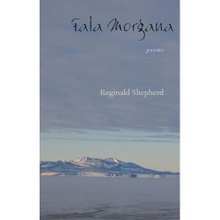
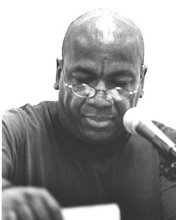
I suppose I should have publicized these a bit earlier, but I don't always have it completely together lately. In any case, there have been a number of publications of Reginald's poetry and essays since his death last fall.
Five of Reginald's poems are anthologized in American Hybrid: A Norton Anthology of New Poetry, edited by Cole Swensen and David St. John. The poems included are: "Direction of Fall," "A Parking Lot Just Outside the Ruins of Babylon," "The Tendency of Dropped Objects to Fall," "Turandot," and "You Also, Nightingale."
"My Mother Dated Otis Redding" was published in Volume 7/2008 of Margie: The American Journal of Poetry.
"The Invisible Diva," an essay on Kate Bush, was included in the essay collection My Diva: 65 Gay Men on the Women who Inspire Them, edited by Michael Montlack.
Several biographical essays about gay poets have been published in LGBTQ America Today: An Encyclopedia. Reginald's essay entries include those on Donald Britton, Hart Crane, Tim Dlugos, Timothy Liu, Carl Phillips, D. A. Powell, Brian Teare, and Mark Wunderlich.
Wednesday, May 27, 2009


Sunday, February 15, 2009
Kevin Prufer on Reginald
Following up on the recent announcement that Reginald's essay collection, Orpheus in the Bronx, has been named a finalist for the award in criticism by the National Book Critics Circle, NBCC board member Kevin Prufer has posted a short piece about Reginald on the NBCC blog.
Sunday, February 8, 2009
Reginald and the Muses
by Robert Philen
In the few months since Reginald’s death, I’ve revisited and reread most all of his writing, poetry and prose, a time or two, mostly as a way of coping with his loss and staying in touch with his ideas, though also because in my capacity as his literary executor, I’ve also been collecting together and editing a variety of his works for publication. One piece I’ve recently returned to is his short essay, “Taking Dictation from a Martian Muse,” in which he treats the notion of poetry as derived from the muses in a variety of guises, though focusing especially on Jack Spicer’s notion of poetry as dictation.
Reginald was largely skeptical of the idea of poetry as dictation or as derived from Muses or as transmissions from the ghost radio:
“Interesting and even inspiring though Spicer’s notion of dictation is, with its promise of escaping what he calls "the big lie of the personal," I wonder if it’s not simply the mirror image of romantic inspiration. Instead of coming from deep within one, from one’s soul or innermost self, the poem comes from outside one, from the Martians or the spooks. In either case, the poet is passive, and abdicates thought and responsibility...Spicer’s Martians seem to be the Muses dressed up in space suits, another way to preserve the romantic (small “r”) notion of the poet as a specially inspired individual with access to the transcendent…”
This is not at all to say that Reginald rejected the notion of poetry as inspired through something like a muse (whether one thinks of that in terms of Martians dictating, ghost radios, the workings of the subconscious mind, or possession by muses):
“I like the idea of poetry as dictation, because writing does feel like that sometimes. I’ve had at least one poem that was literally dictated to me—I woke up and the poem was reciting itself in my head, though I had to come up with my own ending. Don't we all? In that sense Spicer conveys what it often feels like to do poetry.”
I’d say it’s more that Reginald felt that while muses may be involved in the process of writing poetry, they are not sufficient, for the poem requires the active working by the poet upon potentially poetic material, wherever that may have come from:
“The poem, when it is at its best, when we are at our best, is a kind of agon between the poet and the language, and the poet has to bring all his or her resources to bear, or it’s not a real struggle at all, just a performance.”
Reginald’s penultimate poem (if it may be called that – more on that below) is a good example of the relation between muses and poetry, both in the sense of its writing being clearly of something other than his fully conscious, cogent mind, and in the sense that it’s obviously not fully formed poetry.
As many who knew him or follow his writing know, in mid-April last year, several months before he did die in September, Reginald almost died as a result of a perforated intestine, followed by massive abdominal infection and blood poisoning. He was unconscious for ten days in the Intensive Care Unit, with a ventilator down his throat, alongside many other tubes, lines, and pieces of equipment. Even when he regained consciousness, he was completely unable to talk until the ventilator tube was removed, and barely able to talk after that because of lack of strength. For a few days after regaining consciousness and having the ventilator tube removed, he had frequent hallucinations (the result of both the sedatives he had been on and his sickness) and slipped easily in and out of fully cogent consciousness even when I don’t think he was hallucinating.
During the period of a few days during which he was in and out of consciousness but was largely unable to talk, Reginald communicated to me or to his ICU nurses by writing on a clipboard. Much of this writing is completely illegible, as he didn’t have good motor control in his arms at that point. Much of what is legible is lacking in cogency (he was frequently hallucinating at the time, after all). Most of what is legible and cogent is fairly prosaic – parts of simple conversations I remember having with him (or that he had with one of the nurses), such as a short list of food items (grapes, juice, peeled apples, plums, jello) he wanted after I had asked him if there was anything he wanted me to bring him.
But a few weeks ago, while looking through those papers (I hadn’t looked through them much before, because they were too painful), I encountered this, written sometime the day after he regained consciousness, but when he was still frequently suffering powerful hallucinations and was only fully cogent for short moments:
for month and years [,the?] […etary?] [fruits?]
[frails?]
and [to end?] her [battle?] many of other
[toward?] [b.. the?] [history?]
[into ...?]
the single step and [lags?] distance
every [curve follows, linking to above word]
between [L..mbe..g?] and
a palmful of Persian peaches
the world is[s] a work of wish and
human circumstance
this history of being rusted, being burned
rusting, being burned
the [alval?] [bag ?] of of years burned up ,not down
burned off [to?] the for night
The first part in particular is virtually impossible to decipher as a result of the quality of the handwriting, which improves over the course of the page – as if gaining strength and confidence as he wrote. (I would like to acknowledge the help of Brad Richard in attempts to fully decipher the text, to the extent that Reginald’s handwritten page can be deciphered.) Nonetheless, as fragmentary as the text is, as indecipherable as parts of it unfortunately are, the form and elements of a poem are there on the page, and if this isn’t dictation from a muse, I’m not sure what would be.
Overall, it’s clear from his body of work that Reginald was extraordinarily sensitive to potential poetic material. Some of the material of his poetry consisted of linguistic “found objects,” his noticing poetic uses of language whether they occurred in casual conversations or on roadside signs, but most of his material came to him as though from the muses, with the important notation that he constantly took note of poetic material that occurred to him, such that he was constantly jotting things down in one little notebook or another. Maybe that’s all that having a muse is – being attentive to powerful language as it occurs, or maybe Reginald was taking dictation from Martians, channeling transmissions from the ghost radio, or being periodically possessed by Muses. In any case, that was only the start. Regardless of the source of poetic material, he still had to engage in attentive work to create poems. In the process of creating his art, there really were multiple and largely distinct facets to Reginald Shepherd as poet – the medium channeling inspiration and/or careful observer of language (in some cases he had whole lines and more “dictated” from somewhere that he had to write down quickly or lose them forever; in other cases [and more with those linguistic “found objects”] he was more like a particularly astute detective of language), and the artisan or craftsman who skillfully transformed raw poetic material into finished poetry.
In any case, it’s difficult to figure out what to do with this penultimate poem of his (and as literary executor, it is something I have to figure out). It’s tempting to call it a poetic fragment and leave it as is, though with the caveat that this is a fragment in a different sense from textual fragments like Petronius’ Satyricon, a completed text of which only fragments remain, whereas these are fragments of potentiality, artifacts of a poem never made, and it’s precisely for that reason that I don’t think Reginald would ultimately want the fragment left as is. It’s also tempting to me to suppress it as an unfinished work (too late for that now, I suppose), but I don’t think Reginald would want that either. There were works of his that he had chosen not to publish. He had a file titled “Poems not suitable for publication.” Most of the poems in this file are quite good, just poems he didn’t consider his best and/or poems he intended to go back and work more with if he had time, such that it was really the case that he considered them poems not suitable for publication yet. Still, he didn’t want those poems suppressed (something I know because I asked him about this specifically and explicitly on several occasions) – only not published until such point as there was no possibility of his working on them more. This “poem,” written under such extraordinary circumstances, is more fragmentary than those other poems (which actually aren’t fragmentary at all), but I don’t think he’d want it suppressed, and in any case, I find it impossible to suppress lines like “a palmful of Persian peaches,” (hence part of the motivation for this post). Finally, it’s tempting to work these fragments, engage in the agon between poet and language – a prospect I find daunting to say the least, though at least in this case, there is a legible and coherent core to the fragmentary text that with only minor editing and excision (rather than addition coming from me rather than Reginald) functions as a poem in its own right. Something like:
A palmful of Persian peaches,
the world is a work of wish and
human circumstance,
this history of being rusted, being burned
rusting, being burned
years burned up ,not down
burned off to the night
I’m not sure what Reginald would have ultimately done with his fragmentary text, given the chance, but I am confident of what his approach would have been – to have recognized it as materia from the Muses that he would have further agonized with to create a poem.
In the few months since Reginald’s death, I’ve revisited and reread most all of his writing, poetry and prose, a time or two, mostly as a way of coping with his loss and staying in touch with his ideas, though also because in my capacity as his literary executor, I’ve also been collecting together and editing a variety of his works for publication. One piece I’ve recently returned to is his short essay, “Taking Dictation from a Martian Muse,” in which he treats the notion of poetry as derived from the muses in a variety of guises, though focusing especially on Jack Spicer’s notion of poetry as dictation.
Reginald was largely skeptical of the idea of poetry as dictation or as derived from Muses or as transmissions from the ghost radio:
“Interesting and even inspiring though Spicer’s notion of dictation is, with its promise of escaping what he calls "the big lie of the personal," I wonder if it’s not simply the mirror image of romantic inspiration. Instead of coming from deep within one, from one’s soul or innermost self, the poem comes from outside one, from the Martians or the spooks. In either case, the poet is passive, and abdicates thought and responsibility...Spicer’s Martians seem to be the Muses dressed up in space suits, another way to preserve the romantic (small “r”) notion of the poet as a specially inspired individual with access to the transcendent…”
This is not at all to say that Reginald rejected the notion of poetry as inspired through something like a muse (whether one thinks of that in terms of Martians dictating, ghost radios, the workings of the subconscious mind, or possession by muses):
“I like the idea of poetry as dictation, because writing does feel like that sometimes. I’ve had at least one poem that was literally dictated to me—I woke up and the poem was reciting itself in my head, though I had to come up with my own ending. Don't we all? In that sense Spicer conveys what it often feels like to do poetry.”
I’d say it’s more that Reginald felt that while muses may be involved in the process of writing poetry, they are not sufficient, for the poem requires the active working by the poet upon potentially poetic material, wherever that may have come from:
“The poem, when it is at its best, when we are at our best, is a kind of agon between the poet and the language, and the poet has to bring all his or her resources to bear, or it’s not a real struggle at all, just a performance.”
Reginald’s penultimate poem (if it may be called that – more on that below) is a good example of the relation between muses and poetry, both in the sense of its writing being clearly of something other than his fully conscious, cogent mind, and in the sense that it’s obviously not fully formed poetry.
As many who knew him or follow his writing know, in mid-April last year, several months before he did die in September, Reginald almost died as a result of a perforated intestine, followed by massive abdominal infection and blood poisoning. He was unconscious for ten days in the Intensive Care Unit, with a ventilator down his throat, alongside many other tubes, lines, and pieces of equipment. Even when he regained consciousness, he was completely unable to talk until the ventilator tube was removed, and barely able to talk after that because of lack of strength. For a few days after regaining consciousness and having the ventilator tube removed, he had frequent hallucinations (the result of both the sedatives he had been on and his sickness) and slipped easily in and out of fully cogent consciousness even when I don’t think he was hallucinating.
During the period of a few days during which he was in and out of consciousness but was largely unable to talk, Reginald communicated to me or to his ICU nurses by writing on a clipboard. Much of this writing is completely illegible, as he didn’t have good motor control in his arms at that point. Much of what is legible is lacking in cogency (he was frequently hallucinating at the time, after all). Most of what is legible and cogent is fairly prosaic – parts of simple conversations I remember having with him (or that he had with one of the nurses), such as a short list of food items (grapes, juice, peeled apples, plums, jello) he wanted after I had asked him if there was anything he wanted me to bring him.
But a few weeks ago, while looking through those papers (I hadn’t looked through them much before, because they were too painful), I encountered this, written sometime the day after he regained consciousness, but when he was still frequently suffering powerful hallucinations and was only fully cogent for short moments:
for month and years [,the?] […etary?] [fruits?]
[frails?]
and [to end?] her [battle?] many of other
[toward?] [b.. the?] [history?]
[into ...?]
the single step and [lags?] distance
every [curve follows, linking to above word]
between [L..mbe..g?] and
a palmful of Persian peaches
the world is[s] a work of wish and
human circumstance
this history of being rusted, being burned
rusting, being burned
the [alval?] [bag ?] of of years burned up ,not down
burned off [to?] the for night
The first part in particular is virtually impossible to decipher as a result of the quality of the handwriting, which improves over the course of the page – as if gaining strength and confidence as he wrote. (I would like to acknowledge the help of Brad Richard in attempts to fully decipher the text, to the extent that Reginald’s handwritten page can be deciphered.) Nonetheless, as fragmentary as the text is, as indecipherable as parts of it unfortunately are, the form and elements of a poem are there on the page, and if this isn’t dictation from a muse, I’m not sure what would be.
Overall, it’s clear from his body of work that Reginald was extraordinarily sensitive to potential poetic material. Some of the material of his poetry consisted of linguistic “found objects,” his noticing poetic uses of language whether they occurred in casual conversations or on roadside signs, but most of his material came to him as though from the muses, with the important notation that he constantly took note of poetic material that occurred to him, such that he was constantly jotting things down in one little notebook or another. Maybe that’s all that having a muse is – being attentive to powerful language as it occurs, or maybe Reginald was taking dictation from Martians, channeling transmissions from the ghost radio, or being periodically possessed by Muses. In any case, that was only the start. Regardless of the source of poetic material, he still had to engage in attentive work to create poems. In the process of creating his art, there really were multiple and largely distinct facets to Reginald Shepherd as poet – the medium channeling inspiration and/or careful observer of language (in some cases he had whole lines and more “dictated” from somewhere that he had to write down quickly or lose them forever; in other cases [and more with those linguistic “found objects”] he was more like a particularly astute detective of language), and the artisan or craftsman who skillfully transformed raw poetic material into finished poetry.
In any case, it’s difficult to figure out what to do with this penultimate poem of his (and as literary executor, it is something I have to figure out). It’s tempting to call it a poetic fragment and leave it as is, though with the caveat that this is a fragment in a different sense from textual fragments like Petronius’ Satyricon, a completed text of which only fragments remain, whereas these are fragments of potentiality, artifacts of a poem never made, and it’s precisely for that reason that I don’t think Reginald would ultimately want the fragment left as is. It’s also tempting to me to suppress it as an unfinished work (too late for that now, I suppose), but I don’t think Reginald would want that either. There were works of his that he had chosen not to publish. He had a file titled “Poems not suitable for publication.” Most of the poems in this file are quite good, just poems he didn’t consider his best and/or poems he intended to go back and work more with if he had time, such that it was really the case that he considered them poems not suitable for publication yet. Still, he didn’t want those poems suppressed (something I know because I asked him about this specifically and explicitly on several occasions) – only not published until such point as there was no possibility of his working on them more. This “poem,” written under such extraordinary circumstances, is more fragmentary than those other poems (which actually aren’t fragmentary at all), but I don’t think he’d want it suppressed, and in any case, I find it impossible to suppress lines like “a palmful of Persian peaches,” (hence part of the motivation for this post). Finally, it’s tempting to work these fragments, engage in the agon between poet and language – a prospect I find daunting to say the least, though at least in this case, there is a legible and coherent core to the fragmentary text that with only minor editing and excision (rather than addition coming from me rather than Reginald) functions as a poem in its own right. Something like:
A palmful of Persian peaches,
the world is a work of wish and
human circumstance,
this history of being rusted, being burned
rusting, being burned
years burned up ,not down
burned off to the night
I’m not sure what Reginald would have ultimately done with his fragmentary text, given the chance, but I am confident of what his approach would have been – to have recognized it as materia from the Muses that he would have further agonized with to create a poem.
Tuesday, January 27, 2009
National Book Critics Award Finalist
Reginald's essay collection, Orpheus in the Bronx: Essays on Identity, Politics, and the Freedom of Poetry, has just been named a finalist for the award for criticism by the National Book Critics Circle. I'm obviously saddened that he didn't live to see this honor, but I'm please nonetheless by the positive attention this book of his has received. Robert Philen
Follow this link for more details.
Follow this link for more details.
Tuesday, September 30, 2008
Comments on “Kinds of Camouflage”
KINDS OF CAMOUFLAGE
For Robert Philen
1. Déjeuner, with Herbs
Then I am sitting naked on damp grass
(it rained in my yesterday)
while two white gentlemen
in black frock coats share lunch
around me, passing chèvre, cold andouille,
and baguettes, passing bon mots
in French, in someone’s nineteenth century,
my muddled impression of one. I can’t
understand a word. There must be
a picnic basket somewhere, lined with
a red and white checked cloth,
some visual cliché, although
I know the cloth’s pale blue, pale echo
of a sky that isn’t there. They hardly
notice me (two men now passing apples, and
a bottle of medium quality red wine), or no,
I exaggerate, they don’t see me
at all, my body naked to the breeze
too cold for noon although it may
be May; my skin responds
in kind and gets no answer, a situation
I am used to. Browned warmth of my flesh
tones is quickly cooling, and the day
is downcast, overcast: the basket’s
been tipped over, grapes, peaches,
and some fruit I can’t make out
spill over, shadowing green. I hate poems
about food. I am a painting
by now, varnish smudged and darkening
in storage, and getting hungry fast.
2. Field Guide
Above the highway we drove home
between two hills of snow (from one
classical town to another), a bird
you couldn’t recognize at first
when I asked, What is that?.
Something trailing confused you,
threw you off track, a streamer,
scrap of dragon kite, festoon or
crimson plume. Oh, it’s a red-tailed
hawk, with something caught
I can’t make out. Dinner, anyway.
A piece of will defeated
in the wind, some little life’s
fluttered surrender. Perhaps
a red squirrel, rare color
around here (you told me
that), I could have thought
but didn’t. The hawk
won’t be hungry for long, we’re almost
home. It will be again.
“Kinds of Camouflage” has long been one of my favorite poems – by Reginald or anyone. The poem appears in Reginald’s most recent poetry collection, Fata Morgana, published last year, though it was written quite a while earlier, about a year or so after I first met and fell in love with Reginald, sometime during the winter of 2000 – 2001, or perhaps as late as early spring 2001. (I can place its writing in time because Part 2, in addition to being evocative poetry, is a pretty straight description of something we saw and a conversation we had while driving between Syracuse and Ithaca, New York, and that is the possible time range in which we might have made that drive with snow on the ground.)
Here I offer, paralleling the structure of the poem, two commentaries, distinct from one another, but related. Robert Philen
1.
One of the most striking things about Reginald’s poetry is the strength and power of his images.
His images are typically straightforward and clear. In reading his poetry, I’m often reminded of the clarity of imagery in some of the poems of one of Reginald’s favorite modern poets, Williams – the red wheelbarrow (upon which so much depends) beside the white chickens, or “This is just to say”’s plums so cold and so delicious, to reference two famous examples.
Reginald’s imagery is also typically highly evocative. In Part 1 of “Kinds of Camouflage,” there is of course the reference to and evocation of Manet’s painting, but also a sense of the fear of exposure of nakedness (literal and figurative), fear of lack of interest in that nakedness exposed, and perhaps also a bit of a sense of the pomposity in which others are clothed (literally and figuratively).
But as Reginald was often quick to point out, in writing, speaking, or conversation, there are no images in poetry, barring some examples of concrete poetry. An important part the workings of his poetry was the tension between imagery and the fact of the poem as comprised of words.
This tension is often made explicit through calling attention to the “wordiness” of imagery. In Part 1 here, following imagery of food with “I hate poems about food,” followed by a new fiction and image, “I am a painting by now…” Similarly, in “You, Therefore” (posted below, and also published in Fata Morgana), it is made explicit that “you” and imagery of “you” are not the same, though with the ambiguity immediately reintroduced through the use of further imagery in presenting the reality of “you:” “…if I say to you ‘To You I Say,’ you have not been / set to music… you are / a concordance of person, number, voice, / and place, strawberries spread through your name…” Also, in “Kinds of Camouflage,” we encounter the ambiguity of straightforward images misperceived or unperceived (camouflaged), except because marked as camouflaged.
2.
Among other things, Reginald was a poet of landscape and nature, though clearly not in any of the stereotypical sorts of ways.
Again, one (though only one) of the important components of most of his poetry is his striking imagery. This is one of the things that gives his corpus of work a cohesiveness, a style of its own. At the same time, the poems he wrote in different periods, and perhaps more importantly in different places, tend to have their distinct flavors. They’re all markedly “Reginald Shepherd” poems, but his Chicago poems have a different feel from his upstate New York poems from his Pensacola poems.
Much of his imagery he created or drew from subjective or interpersonal experiences or from encountering the poetry and art of others. Part 1 of “Kinds of Camouflage” uses such imagery, and taken in isolation could have been written by Reginald in any of the places he lived. Much of his imagery, though, was drawn from his physical surroundings. In Part 2 of the poem, the imagery is drawn from an incident in upstate New York. He would have emphasized, and I emphasize now, that once placed in the poem, the imagery takes on an existence independent of the occurrence, not at all dependent on the occurrence (which in this particular instance happened to have actually happened), but the imagery did have its initial inspiration in that event and place.
What I’m trying to get across here is really the simple point that he drew great inspiration from and responded to his surroundings. His Chicago poems are often full of the imagery of Lake Michigan, the waterfront, and the industrial trappings of that city – imagery largely absent from later poems. (Other waterfronts are present – but not that one.) I find it virtually impossible to imagine (aside from the fact that I know it was written in Ithaca, NY) Part 2 of “Kinds of Camouflage” having been written in Chicago. It’s possible something somewhat similar could have been written in Pensacola, though without the snow, without the classical towns, without the musing of hypothetical suppositions about whether the hawk’s dinner could have been a red squirrel, i.e. he might have written a poem in Pensacola involving a red-tailed hawk, but the total set of images bears distinct markings as one of his upstate New York poems.
For Robert Philen
1. Déjeuner, with Herbs
Then I am sitting naked on damp grass
(it rained in my yesterday)
while two white gentlemen
in black frock coats share lunch
around me, passing chèvre, cold andouille,
and baguettes, passing bon mots
in French, in someone’s nineteenth century,
my muddled impression of one. I can’t
understand a word. There must be
a picnic basket somewhere, lined with
a red and white checked cloth,
some visual cliché, although
I know the cloth’s pale blue, pale echo
of a sky that isn’t there. They hardly
notice me (two men now passing apples, and
a bottle of medium quality red wine), or no,
I exaggerate, they don’t see me
at all, my body naked to the breeze
too cold for noon although it may
be May; my skin responds
in kind and gets no answer, a situation
I am used to. Browned warmth of my flesh
tones is quickly cooling, and the day
is downcast, overcast: the basket’s
been tipped over, grapes, peaches,
and some fruit I can’t make out
spill over, shadowing green. I hate poems
about food. I am a painting
by now, varnish smudged and darkening
in storage, and getting hungry fast.
2. Field Guide
Above the highway we drove home
between two hills of snow (from one
classical town to another), a bird
you couldn’t recognize at first
when I asked, What is that?.
Something trailing confused you,
threw you off track, a streamer,
scrap of dragon kite, festoon or
crimson plume. Oh, it’s a red-tailed
hawk, with something caught
I can’t make out. Dinner, anyway.
A piece of will defeated
in the wind, some little life’s
fluttered surrender. Perhaps
a red squirrel, rare color
around here (you told me
that), I could have thought
but didn’t. The hawk
won’t be hungry for long, we’re almost
home. It will be again.
“Kinds of Camouflage” has long been one of my favorite poems – by Reginald or anyone. The poem appears in Reginald’s most recent poetry collection, Fata Morgana, published last year, though it was written quite a while earlier, about a year or so after I first met and fell in love with Reginald, sometime during the winter of 2000 – 2001, or perhaps as late as early spring 2001. (I can place its writing in time because Part 2, in addition to being evocative poetry, is a pretty straight description of something we saw and a conversation we had while driving between Syracuse and Ithaca, New York, and that is the possible time range in which we might have made that drive with snow on the ground.)
Here I offer, paralleling the structure of the poem, two commentaries, distinct from one another, but related. Robert Philen
1.
One of the most striking things about Reginald’s poetry is the strength and power of his images.
His images are typically straightforward and clear. In reading his poetry, I’m often reminded of the clarity of imagery in some of the poems of one of Reginald’s favorite modern poets, Williams – the red wheelbarrow (upon which so much depends) beside the white chickens, or “This is just to say”’s plums so cold and so delicious, to reference two famous examples.
Reginald’s imagery is also typically highly evocative. In Part 1 of “Kinds of Camouflage,” there is of course the reference to and evocation of Manet’s painting, but also a sense of the fear of exposure of nakedness (literal and figurative), fear of lack of interest in that nakedness exposed, and perhaps also a bit of a sense of the pomposity in which others are clothed (literally and figuratively).
But as Reginald was often quick to point out, in writing, speaking, or conversation, there are no images in poetry, barring some examples of concrete poetry. An important part the workings of his poetry was the tension between imagery and the fact of the poem as comprised of words.
This tension is often made explicit through calling attention to the “wordiness” of imagery. In Part 1 here, following imagery of food with “I hate poems about food,” followed by a new fiction and image, “I am a painting by now…” Similarly, in “You, Therefore” (posted below, and also published in Fata Morgana), it is made explicit that “you” and imagery of “you” are not the same, though with the ambiguity immediately reintroduced through the use of further imagery in presenting the reality of “you:” “…if I say to you ‘To You I Say,’ you have not been / set to music… you are / a concordance of person, number, voice, / and place, strawberries spread through your name…” Also, in “Kinds of Camouflage,” we encounter the ambiguity of straightforward images misperceived or unperceived (camouflaged), except because marked as camouflaged.
2.
Among other things, Reginald was a poet of landscape and nature, though clearly not in any of the stereotypical sorts of ways.
Again, one (though only one) of the important components of most of his poetry is his striking imagery. This is one of the things that gives his corpus of work a cohesiveness, a style of its own. At the same time, the poems he wrote in different periods, and perhaps more importantly in different places, tend to have their distinct flavors. They’re all markedly “Reginald Shepherd” poems, but his Chicago poems have a different feel from his upstate New York poems from his Pensacola poems.
Much of his imagery he created or drew from subjective or interpersonal experiences or from encountering the poetry and art of others. Part 1 of “Kinds of Camouflage” uses such imagery, and taken in isolation could have been written by Reginald in any of the places he lived. Much of his imagery, though, was drawn from his physical surroundings. In Part 2 of the poem, the imagery is drawn from an incident in upstate New York. He would have emphasized, and I emphasize now, that once placed in the poem, the imagery takes on an existence independent of the occurrence, not at all dependent on the occurrence (which in this particular instance happened to have actually happened), but the imagery did have its initial inspiration in that event and place.
What I’m trying to get across here is really the simple point that he drew great inspiration from and responded to his surroundings. His Chicago poems are often full of the imagery of Lake Michigan, the waterfront, and the industrial trappings of that city – imagery largely absent from later poems. (Other waterfronts are present – but not that one.) I find it virtually impossible to imagine (aside from the fact that I know it was written in Ithaca, NY) Part 2 of “Kinds of Camouflage” having been written in Chicago. It’s possible something somewhat similar could have been written in Pensacola, though without the snow, without the classical towns, without the musing of hypothetical suppositions about whether the hawk’s dinner could have been a red squirrel, i.e. he might have written a poem in Pensacola involving a red-tailed hawk, but the total set of images bears distinct markings as one of his upstate New York poems.
Monday, September 22, 2008
You, Therefore
Of all Reginald's poems, "You, Therefore" is among those that seems to resonate most with people. It's the one I've seen most used as part of the many online tributes to Reginald that have been put up since his death. It's one of two poems I selected to be read at his memorial service (along with his last poem, "God-With-Us").
I can't say with absolute certainty that it was his favorite among his own poems, but "You, Therefore" was definitely among his favorites. From the time he wrote it, he always closed any of his many readings with this poem. Robert Philen
YOU, THEREFORE
For Robert Philen
You are like me, you will die too, but not today:
you, incommensurate, therefore the hours shine:
if I say to you “To you I say,” you have not been
set to music, or broadcast live on the ghost
radio, may never be an oil painting or
Old Master’s charcoal sketch: you are
a concordance of person, number, voice,
and place, strawberries spread through your name
as if it were budding shrubs, how you remind me
of some spring, the waters as cool and clear
(late rain clings to your leaves, shaken by light wind),
which is where you occur in grassy moonlight:
and you are a lily, an aster, white trillium
or viburnum, by all rights mine, white star
in the meadow sky, the snow still arriving
from its earthwards journeys, here where there is
no snow (I dreamed the snow was you,
when there was snow), you are my right,
have come to be my night (your body takes on
the dimensions of sleep, the shape of sleep
becomes you): and you fall from the sky
with several flowers, words spill from your mouth
in waves, your lips taste like the sea, salt-sweet (trees
and seas have flown away, I call it
loving you): home is nowhere, therefore you,
a kind of dwell and welcome, song after all,
and free of any eden we can name
I can't say with absolute certainty that it was his favorite among his own poems, but "You, Therefore" was definitely among his favorites. From the time he wrote it, he always closed any of his many readings with this poem. Robert Philen
YOU, THEREFORE
For Robert Philen
You are like me, you will die too, but not today:
you, incommensurate, therefore the hours shine:
if I say to you “To you I say,” you have not been
set to music, or broadcast live on the ghost
radio, may never be an oil painting or
Old Master’s charcoal sketch: you are
a concordance of person, number, voice,
and place, strawberries spread through your name
as if it were budding shrubs, how you remind me
of some spring, the waters as cool and clear
(late rain clings to your leaves, shaken by light wind),
which is where you occur in grassy moonlight:
and you are a lily, an aster, white trillium
or viburnum, by all rights mine, white star
in the meadow sky, the snow still arriving
from its earthwards journeys, here where there is
no snow (I dreamed the snow was you,
when there was snow), you are my right,
have come to be my night (your body takes on
the dimensions of sleep, the shape of sleep
becomes you): and you fall from the sky
with several flowers, words spill from your mouth
in waves, your lips taste like the sea, salt-sweet (trees
and seas have flown away, I call it
loving you): home is nowhere, therefore you,
a kind of dwell and welcome, song after all,
and free of any eden we can name
Wednesday, September 17, 2008
God-With-Us
GOD-WITH-US
after Jean Valentine
What will I call you
when you are gone?
How will I know your name?
Little star, reflection
on the Sea of Galilee,
a lantern in the wood, half-hid,
half-seen?
reflecting on what can’t be
touched, be known?
And the sheen of milk
across the sky, the galaxy poured out
like me, true sky, false dawn,
and a young woman’s nipple,
star of milk, star of a
nursing child’s mouth, my
child, my lord, whoever
you may be today, tonight
which will not end, a cup
passed to me, from which I may
or may not drink, half-empty
star, still asleep by now?
And your small body, Emmanuel,
how small my heart
to fit inside yours)
lie there, pearled, asleep…
How I want to believe.
(a pearl, an irritant).
Note on "God-With-Us:" This was the last poem Reginald wrote. He wrote it while in the hospital, about two weeks before he died. It was read at his memorial service by his longtime friend Jocelyn Emerson. Robert Philen
after Jean Valentine
What will I call you
when you are gone?
How will I know your name?
Little star, reflection
on the Sea of Galilee,
a lantern in the wood, half-hid,
half-seen?
reflecting on what can’t be
touched, be known?
And the sheen of milk
across the sky, the galaxy poured out
like me, true sky, false dawn,
and a young woman’s nipple,
star of milk, star of a
nursing child’s mouth, my
child, my lord, whoever
you may be today, tonight
which will not end, a cup
passed to me, from which I may
or may not drink, half-empty
star, still asleep by now?
And your small body, Emmanuel,
how small my heart
to fit inside yours)
lie there, pearled, asleep…
How I want to believe.
(a pearl, an irritant).
Note on "God-With-Us:" This was the last poem Reginald wrote. He wrote it while in the hospital, about two weeks before he died. It was read at his memorial service by his longtime friend Jocelyn Emerson. Robert Philen
Monday, September 15, 2008
Reginald Shepherd, 1963 - 2008
As most readers of this blog are probably by now aware, Reginald Shepherd died September 10 after a fight against cancer.
Reginald was my partner, my best friend, my constant companion, my lover, my confidante, and much else besides. I don't know what I'll do without him for the rest of my life. I do plan to occasionally post material about Reginald here, along with writings from his files.
The following is a short piece about Reginald I wrote for his memorial service, which was held yesterday. Robert Philen
Reginald Shepherd, 1963 - 2008
Reginald Shepherd was born April 10, 1963 in New York City and passed away September 10, 2008 in Pensacola, surrounded by people whom he loved and who loved him.
Reginald was the son of Blanche Berry, who was originally from Macon, Georgia. He grew up in Bronx, New York, along with a sister, Regina Graham. He moved to Macon and lived with his aunt, Mildred Swint, after the death of his mother when he was fifteen.
Reginald earned a B.A. degree from Bennington College in Bennington, Vermont, and M.F.A. degrees in Creative Writing from Brown University in Providence, Rhode Island, and the University of Iowa in Iowa City. He taught literature and creative writing, most recently at Antioch University and earlier at the University of West Florida, Cornell University, and Northern Illinois University, and he was remarkably dedicated to his students and the craft of writing.
Reginald was a magnificent writer. He published five books of poetry (Some Are Drowning; Angel, Interrupted; Wrong; Otherhood; and Fata Morgana) and a book of essays (Orpheus in the Bronx), and he edited two poetry anthologies (The Iowa Anthology of New American Poetries and Lyric Postmodernisms). He recently completed a sixth book of poetry and a second volume of essays that will be published posthumously. Among many awards for his writing, he most recently earned a Guggenheim Fellowship in 2008 and won the 2007 silver medal for poetry in the Florida Book Awards.
Reginald met his partner, Robert Philen, in December, 1999 in Ithaca, New York, and ever since, their relationship has grown, based in conversation, compassion, sharing, friendship, passion, and profound love. The two have lived in Pensacola since July, 2001.
Over the past year, Reginald faced tremendous adversity and continuous pain from a series of illnesses related to cancer, but he faced it all with profound strength and courage, tenacity, love of life – and gentleness, dignity, and innocence. He fought long and hard against the illness, but as one nurse who worked with him toward the end put it, “He remained a gentleman to the end.”
Any of us who knew Reginald are devastated and heartbroken at this loss, and we will miss his unique combination of verve and vivacity, wit and intelligence, tenacity and strength, gentleness, empathy, and sweetness, generosity and innocence. We will also, despite our profound sadness, remain ennobled, happy, and blessed by the time we spent with him.
Reginald was my partner, my best friend, my constant companion, my lover, my confidante, and much else besides. I don't know what I'll do without him for the rest of my life. I do plan to occasionally post material about Reginald here, along with writings from his files.
The following is a short piece about Reginald I wrote for his memorial service, which was held yesterday. Robert Philen
Reginald Shepherd, 1963 - 2008
Reginald Shepherd was born April 10, 1963 in New York City and passed away September 10, 2008 in Pensacola, surrounded by people whom he loved and who loved him.
Reginald was the son of Blanche Berry, who was originally from Macon, Georgia. He grew up in Bronx, New York, along with a sister, Regina Graham. He moved to Macon and lived with his aunt, Mildred Swint, after the death of his mother when he was fifteen.
Reginald earned a B.A. degree from Bennington College in Bennington, Vermont, and M.F.A. degrees in Creative Writing from Brown University in Providence, Rhode Island, and the University of Iowa in Iowa City. He taught literature and creative writing, most recently at Antioch University and earlier at the University of West Florida, Cornell University, and Northern Illinois University, and he was remarkably dedicated to his students and the craft of writing.
Reginald was a magnificent writer. He published five books of poetry (Some Are Drowning; Angel, Interrupted; Wrong; Otherhood; and Fata Morgana) and a book of essays (Orpheus in the Bronx), and he edited two poetry anthologies (The Iowa Anthology of New American Poetries and Lyric Postmodernisms). He recently completed a sixth book of poetry and a second volume of essays that will be published posthumously. Among many awards for his writing, he most recently earned a Guggenheim Fellowship in 2008 and won the 2007 silver medal for poetry in the Florida Book Awards.
Reginald met his partner, Robert Philen, in December, 1999 in Ithaca, New York, and ever since, their relationship has grown, based in conversation, compassion, sharing, friendship, passion, and profound love. The two have lived in Pensacola since July, 2001.
Over the past year, Reginald faced tremendous adversity and continuous pain from a series of illnesses related to cancer, but he faced it all with profound strength and courage, tenacity, love of life – and gentleness, dignity, and innocence. He fought long and hard against the illness, but as one nurse who worked with him toward the end put it, “He remained a gentleman to the end.”
Any of us who knew Reginald are devastated and heartbroken at this loss, and we will miss his unique combination of verve and vivacity, wit and intelligence, tenacity and strength, gentleness, empathy, and sweetness, generosity and innocence. We will also, despite our profound sadness, remain ennobled, happy, and blessed by the time we spent with him.
Tuesday, August 26, 2008
On Alvin Feinman’s “True Night”
I am in the hospital for the fourth time in the past five months, this time for excruciating abdominal pain that turned out to be due to a partial bowel obstruction which has still not cleared up. I have had a tube down my throat and have been unable to eat for over a week. I spend most of my days trying to sleep through the pain and nausea.
In the course of the various tests to try to determine the cause of the obstruction, my surgeon found several large masses on my liver which, after a blood test and a liver biopsy, have turned out to be a fast-growing resurgence of my colon cancer. Thus I am in the hospital cancer ward for the foreseeable future, starting chemotherapy again (it had been on hold during my assorted medical crises of the past few months), before I have had time to fully recover from my recent illnesses and surgeries.
Despite all this, and to remind myself that I am not a bundle of symptoms and sicknesses, I am posting (or rather, having my darling Robert post) this final tribute to my recently deceased mentor Alvin Feinman, a discussion of his poem “True Night.” This is an excerpt from a piece on Feinman’s work in general that is included in the anthology Dark Horses, edited by Kevin Prufer and Joy Katz, and in my essay collection Orpheus in the Bronx.
True Night
So it is midnight, and all
The angels of ordinary day gone,
The abiding absence between day and day
Come like true and only rain
Comes instant, eternal, again:
As though an air had opened without sound
In which all things are sanctified,
In which they are at prayer—
The drunken man in his stupor,
The madman’s lucid shrinking circle;
As though all things shone perfectly,
Perfected in self-discrepancy:
The widow wedded to her grief,
The hangman haloed in remorse—
I should not rearrange a leaf,
No more than wish to lighten stones
Or still the sea where it still roars—
Here every grief requires its grief,
Here every longing thing is lit
Like darkness at an altar.
As long as truest night is long,
Let no discordant wing
Corrupt these sorrows into song.
“True Night” is a lovely example of what Bloom calls “a central sensibility seeking imaginative truth without resorting to any of the available evasions of consciousness,” whose temptations are both acknowledged and refused The poem opens at midnight, “The abiding absence between day and day,” a present absence which is both instant (and an instant) and eternal, because it is no given day and no single time, but rather the moment between dates. This no-time is all times, both everlasting and utterly ephemeral. It is (or rather, it is “As though”—what we know is not the thing itself, but only its appearance, our own knowing of it) an air which has opened soundlessly, an air which we take into ourselves with every breath. Particularly within the precincts of a poem, the phrase “an air” in conjunction with the evocation of sound calls up a pun on the Renaissance sense of an “air” as a song. Here, it is a song without sound; it was Keats who wrote that unheard melodies are sweetest, and this soundless air is sweeter than any song one could ever hear.
Here in this time which is no time, the polarity of identity and difference is suspended, and opposites meet. Things are beside themselves, at peace with their own restlessness and discontent, their own failure to be identical with themselves: they are “Perfected in self- discrepancy,” like the off-rhyme of the words “perfectly” and “discrepancy.” All wrongs are posed in the perfection of a still-life, no less wrong but now transfigured into necessity and equipoise: “Here every grief requires its grief.” The poet’s task is both to capture this momentless moment and to leave it undisturbed, to touch its untouchability into art without marring or altering it. The line “I should not rearrange a leaf” can be read either as “I wouldn’t rearrange a leaf even if I could, all is perfect as it is” or as “I should abandon any desire to rearrange a leaf, to insert my own will into the seen/scene.” For this poem, paradise is paradox, where longing (the source of suffering, according to the Buddha) is illumination, and to be lit is to be like darkness “at an altar,” at prayer, prayed to, or both.
The poem’s last stanza insists that no discordant wing (shattering the harmony of the soundless air) should be allowed to corrupt the sorrows the poem presents into song, at least “As long as truest night is long.” That is to say, this admonition holds both forever and only for the most fleeting of (non-) moments. And yet the poem itself, unavoidably, is a song (“lyric,” after all, comes from “lyre”), voiced and heard. The poem both “mystically” asserts a paradoxical concord (echoing and amplifying Stevens’s avowal that “The imperfect is our paradise”) and takes a potentially ironic stance toward it: the poem is both entranced and undeluded.
The inescapable paradox of “True Night,” the truth that it both embodies and struggles against in the name of truth, is that the poem’s discordant wing has corrupted the scene into song: it is helpless not to do so, for otherwise there would be no poem. But the poem has also acknowledged and honored the difference between scene and song: it has reminded us that is remains is however much mind and music might wish it otherwise, however much metaphor and song might wish to translate being into seeming.
In the course of the various tests to try to determine the cause of the obstruction, my surgeon found several large masses on my liver which, after a blood test and a liver biopsy, have turned out to be a fast-growing resurgence of my colon cancer. Thus I am in the hospital cancer ward for the foreseeable future, starting chemotherapy again (it had been on hold during my assorted medical crises of the past few months), before I have had time to fully recover from my recent illnesses and surgeries.
Despite all this, and to remind myself that I am not a bundle of symptoms and sicknesses, I am posting (or rather, having my darling Robert post) this final tribute to my recently deceased mentor Alvin Feinman, a discussion of his poem “True Night.” This is an excerpt from a piece on Feinman’s work in general that is included in the anthology Dark Horses, edited by Kevin Prufer and Joy Katz, and in my essay collection Orpheus in the Bronx.
True Night
So it is midnight, and all
The angels of ordinary day gone,
The abiding absence between day and day
Come like true and only rain
Comes instant, eternal, again:
As though an air had opened without sound
In which all things are sanctified,
In which they are at prayer—
The drunken man in his stupor,
The madman’s lucid shrinking circle;
As though all things shone perfectly,
Perfected in self-discrepancy:
The widow wedded to her grief,
The hangman haloed in remorse—
I should not rearrange a leaf,
No more than wish to lighten stones
Or still the sea where it still roars—
Here every grief requires its grief,
Here every longing thing is lit
Like darkness at an altar.
As long as truest night is long,
Let no discordant wing
Corrupt these sorrows into song.
“True Night” is a lovely example of what Bloom calls “a central sensibility seeking imaginative truth without resorting to any of the available evasions of consciousness,” whose temptations are both acknowledged and refused The poem opens at midnight, “The abiding absence between day and day,” a present absence which is both instant (and an instant) and eternal, because it is no given day and no single time, but rather the moment between dates. This no-time is all times, both everlasting and utterly ephemeral. It is (or rather, it is “As though”—what we know is not the thing itself, but only its appearance, our own knowing of it) an air which has opened soundlessly, an air which we take into ourselves with every breath. Particularly within the precincts of a poem, the phrase “an air” in conjunction with the evocation of sound calls up a pun on the Renaissance sense of an “air” as a song. Here, it is a song without sound; it was Keats who wrote that unheard melodies are sweetest, and this soundless air is sweeter than any song one could ever hear.
Here in this time which is no time, the polarity of identity and difference is suspended, and opposites meet. Things are beside themselves, at peace with their own restlessness and discontent, their own failure to be identical with themselves: they are “Perfected in self- discrepancy,” like the off-rhyme of the words “perfectly” and “discrepancy.” All wrongs are posed in the perfection of a still-life, no less wrong but now transfigured into necessity and equipoise: “Here every grief requires its grief.” The poet’s task is both to capture this momentless moment and to leave it undisturbed, to touch its untouchability into art without marring or altering it. The line “I should not rearrange a leaf” can be read either as “I wouldn’t rearrange a leaf even if I could, all is perfect as it is” or as “I should abandon any desire to rearrange a leaf, to insert my own will into the seen/scene.” For this poem, paradise is paradox, where longing (the source of suffering, according to the Buddha) is illumination, and to be lit is to be like darkness “at an altar,” at prayer, prayed to, or both.
The poem’s last stanza insists that no discordant wing (shattering the harmony of the soundless air) should be allowed to corrupt the sorrows the poem presents into song, at least “As long as truest night is long.” That is to say, this admonition holds both forever and only for the most fleeting of (non-) moments. And yet the poem itself, unavoidably, is a song (“lyric,” after all, comes from “lyre”), voiced and heard. The poem both “mystically” asserts a paradoxical concord (echoing and amplifying Stevens’s avowal that “The imperfect is our paradise”) and takes a potentially ironic stance toward it: the poem is both entranced and undeluded.
The inescapable paradox of “True Night,” the truth that it both embodies and struggles against in the name of truth, is that the poem’s discordant wing has corrupted the scene into song: it is helpless not to do so, for otherwise there would be no poem. But the poem has also acknowledged and honored the difference between scene and song: it has reminded us that is remains is however much mind and music might wish it otherwise, however much metaphor and song might wish to translate being into seeming.
Saturday, August 16, 2008
What's in a Name? Part Three
Because I am not devoid of pride, and because I always want to know whether I’m being talked about and what people are saying if I am, I periodically look myself up online or, as they say, “google” myself. (Perhaps “Google” should be capitalized, since it is a trademark.) The only other Reginald Shepherd who comes up is an aged and very Caucasian Canadian painter, a self-described “poetic realist” who seems well-known in his native Newfoundland and in neighboring Nova Scotia, but nowhere else as far as I can tell, even in Canada. I think of myself as a kind of poetic realist as well, in life and in my poetry, so perhaps our kinship is more than name deep.
Years ago, when I lived in Chicago, another, decidedly less savory Reginald Shepherd popped up when I searched myself. An apparent career criminal (all that came up were his various arrests), he was something of an evil doppelganger. I once was almost denied an apartment because there was a record of my arrest for “criminal shoplifting” (I always wondered what legal shoplifting was) in 1991, two years before I moved to Chicago. And once I received a letter from a social service agency that some woman had named me as the father of her child. I had to call and explain that the last time I had been in the vicinity of a woman’s vagina was the morning I was born. One of the other Reginald Shepherd’s old addresses even appeared on my credit report, an error (among others) I had to call and write in order to rectify. My criminal double has either settled down into legal respectability or died (either is equally likely), as he hasn’t shown up in my web searches for several years. I would like to think that he has seen the error of his ways and now become a law-abiding citizen, but I have no great desire to inquire further.
When I look up the most common misspelling of my name, Reginald Shepard, which people sometimes insist upon even when they’re publishing or paying me, no matter how many times I sign and print the correct spelling of my name, besides finding various references to my misspelled self (I try to correct them when I can), I also find references to a death row inmate in Florida by that name. I don’t know what his crime was, but I imagine that it was probably murder. I find it a little disturbing to once again have a criminal doppelganger living (though who knows for how long) in the same state. At least there are two crucial letters separating my name from his, his fate from mine. But still…
Years ago, when I lived in Chicago, another, decidedly less savory Reginald Shepherd popped up when I searched myself. An apparent career criminal (all that came up were his various arrests), he was something of an evil doppelganger. I once was almost denied an apartment because there was a record of my arrest for “criminal shoplifting” (I always wondered what legal shoplifting was) in 1991, two years before I moved to Chicago. And once I received a letter from a social service agency that some woman had named me as the father of her child. I had to call and explain that the last time I had been in the vicinity of a woman’s vagina was the morning I was born. One of the other Reginald Shepherd’s old addresses even appeared on my credit report, an error (among others) I had to call and write in order to rectify. My criminal double has either settled down into legal respectability or died (either is equally likely), as he hasn’t shown up in my web searches for several years. I would like to think that he has seen the error of his ways and now become a law-abiding citizen, but I have no great desire to inquire further.
When I look up the most common misspelling of my name, Reginald Shepard, which people sometimes insist upon even when they’re publishing or paying me, no matter how many times I sign and print the correct spelling of my name, besides finding various references to my misspelled self (I try to correct them when I can), I also find references to a death row inmate in Florida by that name. I don’t know what his crime was, but I imagine that it was probably murder. I find it a little disturbing to once again have a criminal doppelganger living (though who knows for how long) in the same state. At least there are two crucial letters separating my name from his, his fate from mine. But still…
Subscribe to:
Posts (Atom)