I have always had a fondness for verbal extravagance in poetry, for rhetorical splendor and a fine excess. One should be suspicious of such excess to a certain extent (Eliot wrote that a poet should always be suspicious of language), lest it descend into mere self-indulgence. But ours is, in French novelist Nathalie Sarraute’s phrase, an age of suspicion, in which intensity of feeling and expression is an embarrassment, at best an admission of lack of discipline and self-control, at worst an invalidation of whatever one may have to say. “You’re being so emotional,” people say, as if to feel strongly cancels out the worth of one’s thoughts, arguments, or positions.
As Lani Guinier, Clinton’s failed nominee for attorney general, said in a 1994 interview in the magazine Vibe, “if you show too much emotion of whatever kind, that then defines you forever, and you don’t have the opportunity to present yourself in any nuanced or multifaceted way.” It sometimes seems that to express emotion, let alone passion, is to be marked as de trop by definition. Emotion is only allowed vicarious (and stereotyped) emotional expression by means of music, movies, and television, which offer up reified, commodified (and sterilized) versions of feeling. As Roland Barthes, as quoted in the Financial Times, of all places, once said, “What the public wants is not passion but the appearance of passion.”
Robert Duncan is a passionate poet and a poet of passion, verbal, emotional, and intellectual. His work is sometimes dismissed as sentimental. Critic M.L. Rosenthal so dismissed the opening lines of “A Sequence of Poems for H.D.’s 73rd Birthday,” from Roots and Branches [Rosenthal mis-cites the poem’s title], in his 1967 book The New Poets:
The young Japanese son was in love with a servant boy.
To be in love! Dont you remember how the whole world is governed
by a fact that embraces
everything that happens?
The passage goes in this vein for several more lines, concluding with “And youth in love with youth!” before veering off in a more mystical direction. Rosenthal’s discussion, in which “I will not say that such a passage is an imposition on the heterosexual reader” (as if homosexual readers have not been imposed upon for centuries), and in which he denigrates the passage’s emotional exuberance as a “girlish outcry,” has more than a whiff of homophobia—the expression of homosexual passion or desire is by definition “too much,” “excessive.” Rosenthal is more approving when Duncan writes of the pain and shame of homosexual desire, as in “Sonnet 1”:
Now there is a Love of which Dante does not speak unkindly,
Tho it grieves his heart to think upon men
who lust after men and run.
Sometimes Duncan’s poetry is sentimental. That is to say, sometimes the excess feels gross rather than fine, willful rather than felt, like a performance. As Wallace Stevens noted, sentimentality is not a surplus of feeling but a failure of feeling. But that is not Duncan at his best.
I am impressed by the unabashed and unembarrassed lyrical and emotional exuberance of Duncan’s poetry, the utter absence of irony or defensive self-consciousness. Not that Duncan is unself-consciousness (far from it), but self-awareness is not used as a shield or a weapon. As poet Brian Teare writes in his essay “A Drama of Truth”, “it’s Duncan’s lack of irony about his vocation, as well as [about] the possibilities and functions of both imagination and language, that makes him most vulnerable to our postmodern distrust.” On his web log, The Rest Is Noise, music critic Alex Ross writes in similar terms about Italian opera composer Giacomo Puccini that, “despite his popularity, [Puccini] creates discomfort in this hyper-stylized, ironic age, because he deals in direct emotion, [and] avoids ideology and moralism.”
Long ago an undergraduate poetry professor told us not to let irony become a pet, which too many poets these days have done: that is, when they haven’t in fact become irony’s pets. Irony is too often used as an evasion, a way to disclaim responsibility for one’s statements and one’s feelings, or even for pretending one doesn’t have feelings, which can be so disruptive, even disturbing, so messy and uncool. As Louise Glück has written from a more generous-minded viewpoint, “Too often distaste for sentiment, anxiety at the limitations of the self, create contempt for feeling, as though feeling were what was left over after the great work of the mind was finished” (“Foreword” to Frail-Craft by Jessica Fisher, xv).
While Eliot wrote that “Poetry is not a turning loose of emotion, but an escape from emotion,” he also pointed out that “only those who have personality and emotions know what it means to want to escape from these things” (Selected Prose of T.S. Eliot, 43). Too many younger American poets want not just to escape from emotions but to have none. Flippancy and sarcasm can be a way of dealing with emotional pain, of distancing it and making it easier to handle, in the way that one dons protective gear to handle volatile materials. They’re very popular in American poetry today. But there are more challenging and interesting ways to engage emotion while avoiding sentimentality. Being cool doesn’t leave much room for depth or exploration, for risk or for surprising oneself. As Marianne Moore writes in her essay “Idiosyncrasy and Technique,” “We are suffering from too much sarcasm, I feel. Any touch of unfeigned gusto in our smart press is accompanied by an arch word implying, ‘Now to me, of course, this is a bit asinine.’... Blessed is the man who does not sit in the seat of the scoffer.” Irony and sarcasm aren’t the same thing, though they’re often confused. Irony always takes what it addresses seriously.
In Duncan’s poetry, one affected not so much by the feeling per se (anyone can feel, or almost anyone), but by the willingness to be seen to feel, the open performance of feeling (the poem, after all, is not a person—it feels nothing, though at its best it embodies and enacts emotion and thought and their interactions), a feeling that may appear excessive or inappropriate from a less sympathetic point of view. But Duncan, at his best, makes his excesses artful, his inappropriateness movingly defiant rather than embarrassing, as it so easily could be.
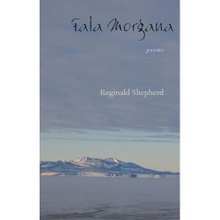
When I wrote “You, Therefore,” which I reproduce below, and which is included in my book Fata Morgana, I was reading a great deal of early Duncan, specifically The Years as Catches: First Poems (1939-1946), published in 1966 by Oyez and now out of print, and The First Decade: Selected Poems 1940-1950, published by Fulcrum Press in 1968 and now also out of print. Duncan always remains open to the immediacy of the moment of composition—“I sought to liberate in language natural powers of the poem itself…in the excitement of the music, I was transported beyond the model into the presence of the poetic intention itself”—even if that transport sometimes leads him astray, into what could be considered poetic error: “It is all wrong my intelligence protests, but it is a commanding confession of my true state.”
The “crisis of truth and permission” of which Duncan writes is one with which I have struggled all my life as a writer, though I have usually taken care (perhaps too much care) not to let permission permit error. But nonetheless, reading these early poems of Duncan’s gave me a permission, allowed me (in poet John Gallaher’s phrase) to write “You, Therefore,” a more open, less careful, and less guarded poem than I usually allowed myself:
Often I am permitted to return to a meadow
…
that is a place of first permission,
everlasting omen of what is.
That, and the security of a real-life interlocutor to my words, the knowledge that I was no longer speaking to and into an absence, or at best a phantom presence I had myself to conjure up. I was no longer writing simulacra of feelings I imagined having about men I’d never met or men who never existed, mourning lost loves I’d never had. This real presence provides the possibility of the poetic projection of male homoeroticism as a mode of transcendence and even salvation in the company of a beloved other rather than of abjection and self-abnegation before unattainable figures of a real but too highly figured, and always blocked, desire.
You, Therefore
For Robert Philen
You are like me, you will die too, but not today:
you, incommensurate, therefore the hours shine:
if I say to you “To you I say,” you have not been
set to music, or broadcast live on the ghost
radio, may never be an oil painting or
Old Master’s charcoal sketch: you are
a concordance of person, number, voice,
and place, strawberries spread through your name
as if it were budding shrubs, how you remind me
of some spring, the waters as cool and clear
(late rain clings to your leaves, shaken by light wind),
which is where you occur in grassy moonlight:
and you are a lily, an aster, white trillium
or viburnum, by all rights mine, white star
in the meadow sky, the snow still arriving
from its earthwards journeys, here where there is
no snow (I dreamed the snow was you,
when there was snow), you are my right,
have come to be my night (your body takes on
the dimensions of sleep, the shape of sleep
becomes you): and you fall from the sky
with several flowers, words spill from your mouth
in waves, your lips taste like the sea, salt-sweet (trees
and seas have flown away, I call it
loving you): home is nowhere, therefore you,
a kind of dwell and welcome, song after all,
and free of any eden we can name
Showing posts with label emotions. Show all posts
Showing posts with label emotions. Show all posts
Sunday, March 9, 2008


Subscribe to:
Posts (Atom)